Mountain and River Vocabulary for Kids
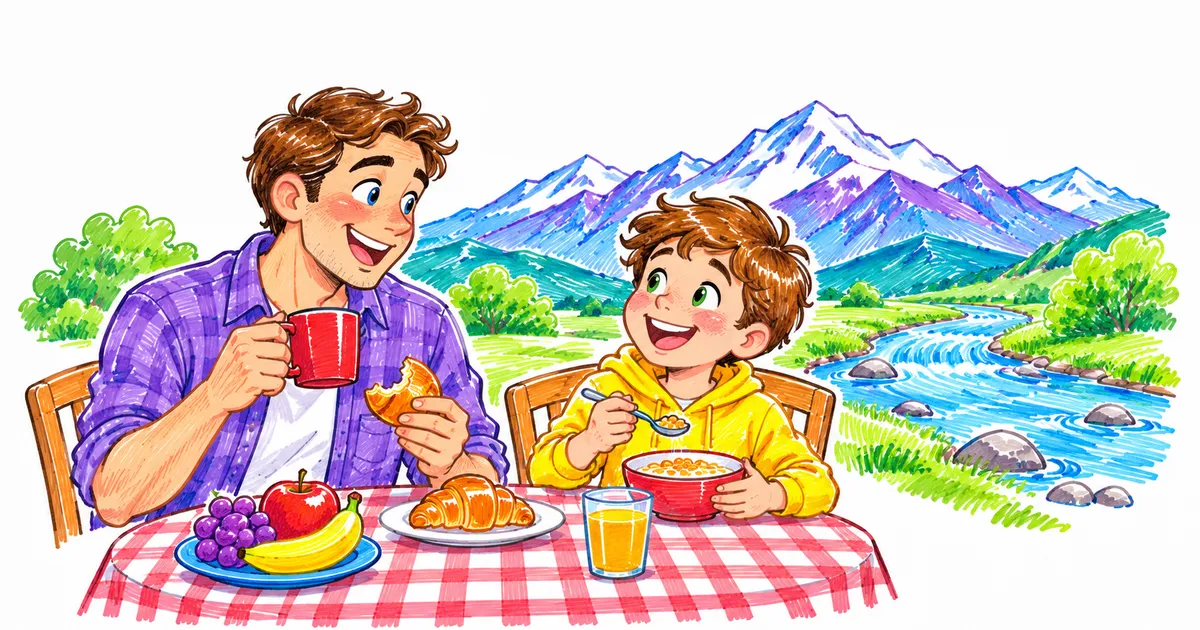
Mountain and River Vocabulary in English: Words and Activities for Kids introduces landform words, action verbs, and location phrases for full sentences. A child can point to a peak, trace a river from source to mouth, or explain that a bridge crosses the water. Instead of memorising geography terms, children connect each word with a picture, movement, and sentence. This guide offers a focused word set, speaking models, age-based activities, home practice, and corrections for frequent errors.
Core Words for Mountains and Rivers
For Mountain and River Vocabulary in English: Words and Activities for Kids, begin with concrete nouns shown in a photograph, drawing, or map. Add a few verbs and adjectives. Children can then build combinations such as “a steep slope,” “a shallow stream,” and “water flows downhill.”
Teach words in small groups. Start with mountain, peak, slope, and climb. A river group might contain river, bank, bridge, and flow. After children recognise them, add valley, ridge, source, mouth, shallow, and deep.
Putting the Words into Sentences
Practise Mountain and River Vocabulary in English: Words and Activities for Kids through short sentence frames. Start with “This is a…,” “I can see…,” and “The water is….” A beginner can say, “This is a river” or “I can see a mountain.” A confident child can add detail: “The narrow river flows through a green valley.”
Location phrases make vocabulary practical. Model: “The village is beside the river,” “The path goes up the mountain,” “A bridge crosses the river,” and “The waterfall is between two cliffs.” Ask the child to move a toy or point while saying above, below, beside, between, across, and through.
Older children can explain sequences and causes: “Rain falls on the mountain, and the water runs downhill,” or “The river becomes wider as it moves towards the sea.” Across LearnLink lessons, our tutors adjust the picture task from single-word answers to detailed descriptions and follow-up questions.
Activities for Different Ages
School-age kids: Use movement, toys, and large pictures. Make a mountain with both hands, move one hand down the “slope,” and turn a blue ribbon into a river. Say one word, then ask your child to point or copy the action. Finish with a two-part instruction: “Climb the mountain and cross the river.” Reading is not required.
School-age kids: Draw a map with a mountain, valley, river, bridge, and waterfall. Give clues: “Start at the peak. Go down the slope. Stop beside the river.” Then change roles. When your child gives directions, listen for accurate place words without correcting every grammar error.
School-age kids: Use a real or imaginary landscape for comparisons, routes, or explanations. Your child might compare a stream with a river, plan a safe walking route, or describe water travelling from source to mouth. A multilingual child may know the geography concept in another language. Build on that knowledge and attach the English word to the familiar idea.
Short Practice Sessions That Fit Family Life
A short routine keeps Mountain and River Vocabulary in English: Words and Activities for Kids manageable. Choose four to six words, show them in a picture, use each in a sentence, and revisit them later without answers. Questions such as “Where is the river bank?” or “What is at the top of the mountain?” test meaning instead of sound repetition.
Family-trip photos, picture books, weather reports, and map apps provide prompts. Ask one question at a time: “Is the slope steep or gentle?” “Where does the stream flow?” or “What would you need to cross the river?” Accept a short correct answer before requesting more detail.
Build a Landscape and Describe It
Use cushions for mountains, a scarf for a river, and a book for a bridge. Ask your child to place a toy beside the river, on the peak, in the valley, and across the bridge. Then let your child give instructions. For an extra challenge, remove one object and ask, “What changed?”
Repeat the words in new combinations another day. The river can be wide in one picture and narrow in another; the mountain can be rocky, snowy, steep, or low. Variation helps children use vocabulary flexibly instead of linking each word to one picture.
Common Mistakes and Simple Corrections
Children may confuse peak and mountain. The mountain is the whole landform; the peak is its highest point. They may use side for slope. Side is understandable, but slope describes land rising or falling. Model the precise word: “Yes, the goat is on the slope.”
Bank and shore need distinction. A bank is land beside a river or stream. Shore usually means land beside a sea or lake. Stream and river both describe flowing water, but a stream is usually smaller. Model these distinctions without interrupting a child’s sentence.
Prepositions cause another problem: we go up or down a mountain, across a river, along a river bank, and through a valley. Instead of explaining several rules, contrast two examples with gestures. “We walk along the bank” follows the river; “we walk across the river” moves between its sides.
- Practice distinguishing mountain and river with children aged six to nine.
- Use two picture cards and ask your child to name each landform.
- Correct plural errors by modeling mountains and rivers in three short sentences.
- Try a five-minute sorting game with eight landscape pictures after reading.
- Repeat difficult words slowly, then let your child say each word twice.
When a word has several meanings or pronunciations, Cambridge Dictionary is a useful check before turning it into child-friendly examples.
Frequently Asked Questions
These answers help families adapt mountain and river vocabulary practice to a child’s age, language background, and attention span.
How Many Mountain and River Words Should My Child Learn at Once?
Start with four to six words if your child is new to English or online learning. Use each word in speech, a picture, and an action before adding more. An older or confident child may handle eight to ten related words. Progress depends on whether your child understands and uses the words without a prompt, not the first list’s size.
Can We Practise Without Worksheets?
Yes. Use a drawing, toy landscape, map, or photograph. Your child can point, move objects, follow directions, compare features, or describe a route. Mountain and River Vocabulary in English: Words and Activities for Kids suits spoken tasks because the words describe visible places, directions, and movements. Worksheets can support review but are optional.
What If My Child Knows These Ideas in Another Language?
Build on that knowledge. Confirm the concept, give the English word, and use it in a short sentence. Your child might say the word in another language before repeating “The river flows through the valley.” Other languages need not be hidden or avoided. Practise one target sentence at a time.
How Can I Tell Whether My Child Remembers the Vocabulary?
Ask your child to use the words with a new picture or task. Pointing to a labelled image checks recognition; describing an unlabelled landscape checks recall. Your child can give directions, correct a silly sentence, or explain the difference between a peak and a slope. Look for growing independence, not perfect spelling or a long answer after one lesson.
If your child needs steady speaking practice, start small — choose a trial lesson.
Stay updated on our latest tips and resources by following us on Instagram LearnLink.