Pets in English: Vocabulary for Kids
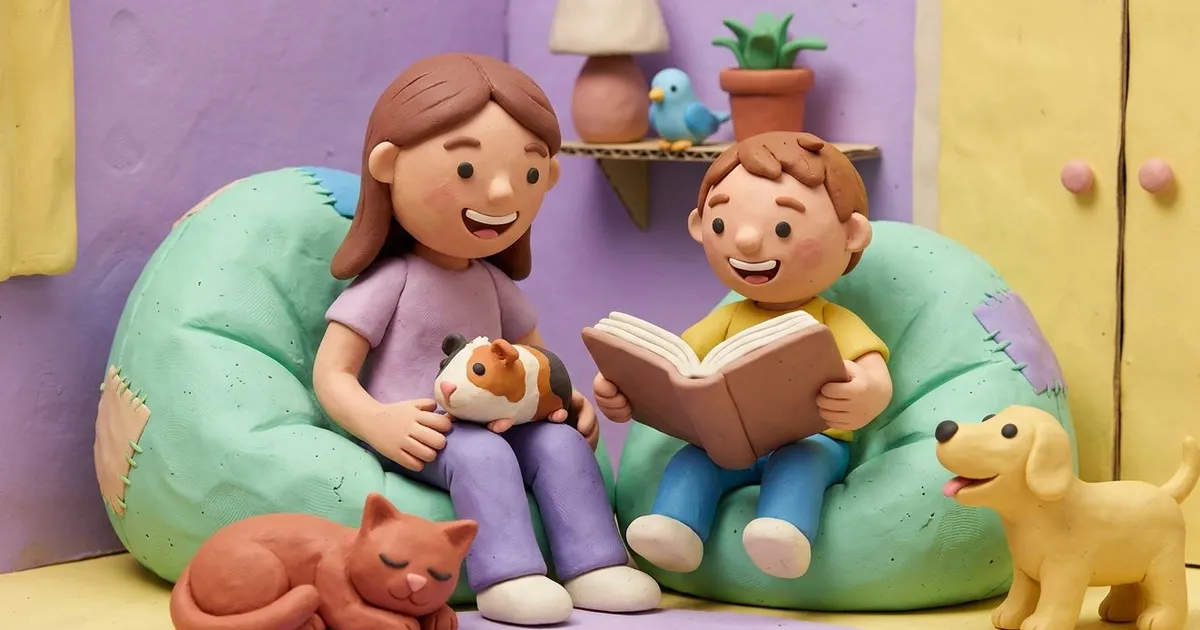
Pets in English for Kids covers animal names, routines, sounds, and sentence patterns. Children can describe a cat’s fur, explain what a rabbit eats, or ask whether a dog can swim. Beginners can picture the animals; older learners can discuss behaviour, wellbeing, and responsible ownership. Children without pets can practise through photos, toys, drawings, and imagined animals.
📥 Pets in English for Kids
Words, Phrases & Practice Activities
Leave your email — we'll send the PDF to your inbox.No spam — the PDF plus one short reminder. Unsubscribe anytime.
Why PET Vocabulary Matters
Start with these core words and short examples before adding more specific vocabulary.
The dog runs in the park.
The cat sleeps on the chair.
The rabbit eats a carrot.
The bird sings in the tree.
The fish swims fast.
The horse lives on a farm.
The cow eats grass.
The duck walks near the pond.
Animals give children concrete subjects. Learners can distinguish a bird from a fish, act out “jump” or “fly,” and connect soft, noisy, small, or friendly with images. These links put new language into context.
The theme introduces grammar naturally. Children can practise “It has,” “It can,” “There is,” and “I would like.” Pets in English for Kids therefore teaches more than animal names.
Core Words to Learn First
When teaching Pets in English for Kids, begin with familiar nouns: pet, dog, puppy, cat, kitten, rabbit, hamster, guinea pig, fish, bird, parrot, turtle, and tortoise. Add fur, feathers, tail, paws, wings, beak, shell, and whiskers. Children can point, draw, or match before speaking.
Routine vocabulary adds purpose: feed, brush, clean, walk, play, water, food, cage, tank, basket, collar, lead, and leash. Teach regional pairs in context. British English often uses lead for a dog’s strap; American English tends to use leash. Both are correct.
Sentence Patterns That Grow with the Learner
Move from naming to describing, then exchanging information. Younger children may say, “It is a rabbit.” Confident learners can add, “It has long ears, it eats plants, and it needs a safe place to rest.”
Model a sentence, then pause for the child to complete it: “The parrot has.” or “A hamster can.” Older learners can compare animals with because, but, while, and however: “A rabbit is quiet, while a parrot may be noisy.”
Games That Turn Words into Active Language
Turn Pets in English for Kids into a guessing game. One player describes an unnamed animal: “It has feathers. It can fly. It may copy sounds.” The other answers: “I think it is a parrot.” Drawing, mime, and toys give children extra thinking time.
Try sorting pictures by body covering, movement, home, or daily needs. Require a reason for each match: “The fish goes in this group because it lives in water.” For reading practice, match brief feeding notes to each animal.
Try a PET Detective Game
Choose an animal and give increasingly specific clues: “I am small. I have fur. I live in a cage. I can run on a wheel.” After the child guesses “hamster,” swap roles. Older learners should add a daily-needs clue and justify their answer.
Choosing Materials for Different Ages
Resources should prompt language, not passive watching or tapping. Distinct pictures, short audio, and a pause button support beginners. Avoid screens crowded with labels, rewards, and moving objects. Older learners need facts, decisions, or reasons to compare animals.
After closing the material, ask the child to retell it. If only isolated words remain, simplify the input. If the child explains a pet’s needs and asks a follow-up question, introduce adopt, protect, train, groom, and behave.
Respectful and Safe Ways to Discuss Animals
Pet ownership is not universal. Housing rules, customs, beliefs, allergies, cost, and veterinary access shape each family’s choices. Ask “Which animals are popular pets where you live?” instead of assuming every child has or wants one.
English animal sounds are language labels, not universal forms. A dog may say “woof” in an English activity, while another language represents the sound differently. Multilingual children can compare versions without ranking their accuracy.
Separate language practice from animal handling. Children should ask an owner before touching an animal, approach calmly, and follow adult hygiene and safety instructions. For children who fear animals or recently lost a pet, use drawings or imaginary creatures and avoid personal questions.
A Simple Routine for Steady Progress
A regular Pets in English for Kids routine can start with picture review, continue with a speaking game, and end with one notebook sentence. The next day, mix familiar cards with limited new language. Repeated recall beats copying a long word list once.
Across LearnLink lessons, our online English tutors adapt the pet theme for learners aged 4–15. Beginners may name and mime animals; older children can compare daily needs, judge whether an animal suits a home, or write an adoption profile.
For the rule wording, Wikipedia — English Grammar is a useful reference while the practice examples here stay adapted for children.
Frequently Asked Questions
How Many PET Words Should a Child Learn at Once?
Choose a set the child can recognise and say without strain. An early beginner might learn dog, cat, fish, bird, and rabbit before body parts or care verbs. Review through pictures and sentences. Add words when the child recalls most of the set without copying.
Which PET Words Should a Beginner Learn First?
Start with familiar animal names and practical verbs: dog, cat, fish, bird, rabbit, feed, walk, swim, fly, and sleep. Then add visible features: tail, paws, fur, wings, and shell. vocabulary supports sentences such as “The dog has paws” and “The fish can swim.”
Can Children Study the Theme Without Owning an Animal?
Yes. Pets in English for Kids does not require an animal at home. Children can use photographs, toys, drawings, books, or an imagined pet. They might design a safe rabbit home, describe a neighbour’s cat with permission, or compare animals seen locally.
Should Children Learn British or American PET Vocabulary?
Teach the form used at school or in the child’s main materials, while noting regional alternatives. Lead and leash form one pair; turtle and tortoise may differ across regions. Children need not rank either variety. They should recognise both and use one consistently.
How Can an Older Child Move Beyond Basic Animal Names?
Move from labels to decisions and explanations. Ask which pet could live comfortably in a small home, what responsible care involves, or why wild animals should not be pets. The child can compare sources, write a care plan, or defend an opinion with evidence and appropriate welfare language.
Start your child's English journey today — book a trial lesson with LearnLink.
Stay updated on our latest tips and resources by following us on Instagram LearnLink.