Pirate Words in English for Kids
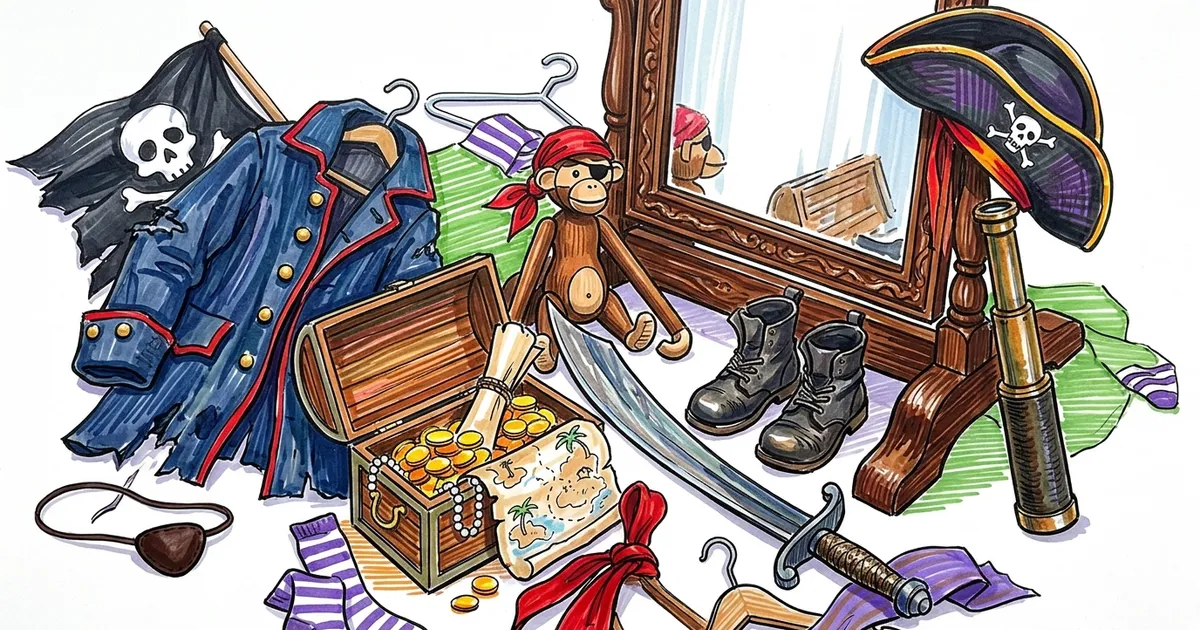
Pirate Words in English for Kids: Vocabulary and Activities gives children practical sea, sailing, action, and pretend-play language. Begin with nouns such as anchor, map, and treasure. Then add commands and expressions: Raise the sail! and Land ahoy! Children can point, move, search, draw, and speak while learning. Multilingual learners may know a compass or island in another language and need the English word.
📥 Pirate English Adventure
Learn, use, and practise playful pirate vocabulary in real situations.
Leave your email — we'll send the PDF to your inbox.No spam — the PDF plus one short reminder. Unsubscribe anytime.
Core Pirate Words and Phrases
Teach related vocabulary in small groups: objects, people, places, actions, and directions. Children should hear each word, see or act out its meaning, then put it in a short phrase.
pirate, captain, crew, sailor, shipmate, lookout
ship, boat, sea, ocean, island, harbour, wave, storm
treasure, map, compass, chest, coin, gold, clue, telescope
sail, steer, climb, search, dig, hide, follow, escape
north, south, east, west, left, right, forward, back
Ahoy!, Aye!, Land ahoy!, Ship ahead!, All hands on deck!, Shiver me timbers!
Vocabulary cards for practice
“The captain checks the map.”
“The crew raises the sail.”
“Drop the anchor near the island.”
“The compass points north.”
“We found treasure in the cave.”
“The lookout sees land.”
“Steer toward the harbour.”
“Dig beside the palm tree.”
Use Pirate Words in English for Kids: Vocabulary and Activities as a phrase bank, not a spelling list. A beginner can say, “A boat,” or “Find the map.” A confident learner can expand: “The crew followed the map across the island and found a treasure chest.” Both responses show progress.
Using Pirate Language in Context
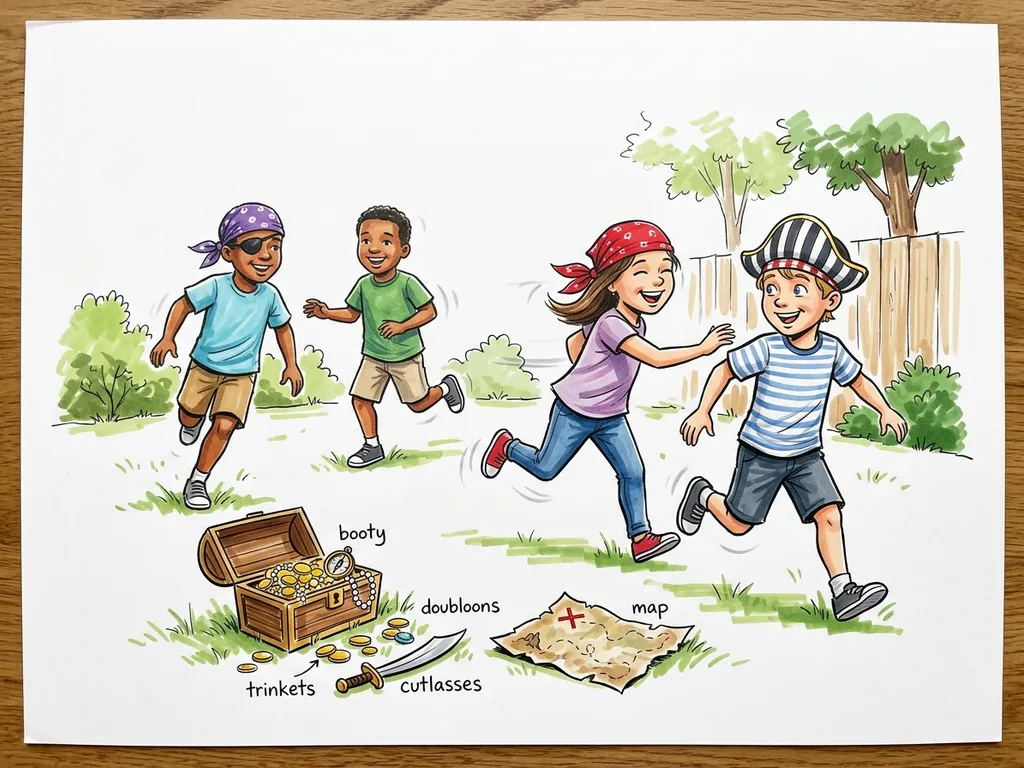
Pirate vocabulary combines standard modern English with story language. Pirate Words in English for Kids: Vocabulary and Activities should show the difference. Anchor, crew, and island are everyday words. Arrr! and Shiver me timbers! are theatrical.
Put new words into a scene: “The lookout sees an island. The captain checks the compass. The crew raises the sail. The vessel moves east.” Children can retell it with picture cards, toys, gestures, or drawings.
How to Introduce the Vocabulary
Use three moves: show, say, and use. Show an anchor, say the word naturally, then make a sentence: “The anchor keeps the vessel in one place.” Ask your child to point to it before expecting pronunciation or spelling.
Contrast words that may blur together. A sea vessel is bigger than a boat. A sail catches wind; a sailor is a person. A map shows places and routes; a compass shows direction. Objects, models, and sketches reinforce these contrasts.
For a multilingual child, connect Pirate Words in English for Kids: Vocabulary and Activities to familiar concepts. Keep the child’s other languages involved. Name the object in English, compare it with the known word when helpful, then return to an English sentence: “This is a compass. The compass points north.”
Activities for Different Ages
For school-age kids, turn Pirate Words in English for Kids: Vocabulary and Activities into movement. Place pictures of a sail, map, island, anchor, and treasure chest around the room. Give one instruction at a time: “Touch the map,” “Walk to the island,” or “Hide the coin.” Use a playful pirate voice while pronouncing target words accurately.
Draw a treasure map together. Add an island, cave, harbour, palm tree, path, and compass rose. Your child can say, “Go north,” “Turn left at the cave,” and “Dig beside the tree.” Swap roles so the child follows and gives instructions, practising listening, sequence words, and place phrases.
For richer speaking and writing, ask your child to write a captain’s log, plan an escape, or create a captain-and-crew dialogue. Set limits: include five sea words, three action verbs, and one problem. Older learners can rewrite theatrical pirate lines in modern English.
Practice Ideas for Home Lessons
Focus each review: one round for objects, the next for actions. Ask questions beyond pointing: “Why does the crew need a compass?” “What should they do before the storm?” “Where could the captain hide the map?” Accept a short answer, then model a fuller response.
Five-minute Treasure Hunt
Hide a safe household object as the treasure. Give three English clues, such as “Walk past the table,” “Look under something blue,” and “The treasure is beside a book.” After finding it, your child hides the object and gives the next set of clues.
Reuse words in varied tasks. A child might match mast to a picture, label it in a sailing scene, then say, “The sailor climbed the mast.” LearnLink tutors can adjust prompt length and support for learners aged 4–15.
Correcting Common Mistakes
Do not let a pirate voice obscure speech. Children may stretch Arrr, but learning words need accurate sounds. Say treasure, captain, and anchor normally before speaking in character. Explain that a pirate accent is a story convention, not a country’s or culture’s everyday speech.
Check grammar. Use a pirate, a compass, and an anchor. For loot, treasure is often uncountable: “The crew found some treasure.” A person is a pirate; piracy names the act or practice. A person who sails is a sailor, not a sail.
Keep nautical directions accurate. Bow means a ship’s front; stern means its back. Port is the left side and starboard the right when facing the bow. For beginners, teach front, back, left, and right first.
- Try one pirate word at a time with children aged five to seven.
- Practice saying “ahoy,” “matey,” and “treasure” slowly, correcting sounds without criticism.
- Use picture cards to match five pirate words with clear meanings.
- Read one pirate story aloud, then ask your child to repeat new words.
- Review Pirate Words in English for Kids: Vocabulary and Activities through playful role-play.
When a word has several meanings or pronunciations, Cambridge Dictionary is a useful check before turning it into child-friendly examples.
Frequently Asked Questions
Which Pirate Words Should a Child Learn First?
Start with words that are easy to show: pirate, ship, captain, map, island, treasure, sea, and anchor. Add sail, look, find, and dig. After your child follows short instructions, introduce directions and longer expressions.
Are Pirate Expressions Part of Normal English?
Many appear mainly in humour, costumes, books, and films. Crew, deck, anchor, and compass have modern meanings. Ahoy!, Arrr!, and Shiver me timbers! sound theatrical. Teach each phrase’s meaning and likely setting.
How Can a Multilingual Child Practise These Words?
Connect each English word with an idea known in another language. Practise it through a picture, action, and sentence. A child might label a map in English, explain the route in a home language, then give two English directions. Existing language knowledge builds a bridge.
How Often Should We Practise Pirate Vocabulary?
Use Pirate Words in English for Kids: Vocabulary and Activities in short sessions across the week. Five or ten focused minutes can include matching, one spoken game, and a recap. Revisit older words during later play instead of replacing the set. Stop while your child remains engaged, then continue another day.
- Start with six concrete words and check that your child can point to each one.
- Practice two short commands with pictures, toys, or movement.
- Try one treasure-map activity, then reuse the same vocabulary later in the week.
A short one-to-one lesson can show what level and pace fit your child — book a trial English lesson.
Stay updated on our latest tips and resources by following us on Instagram LearnLink.