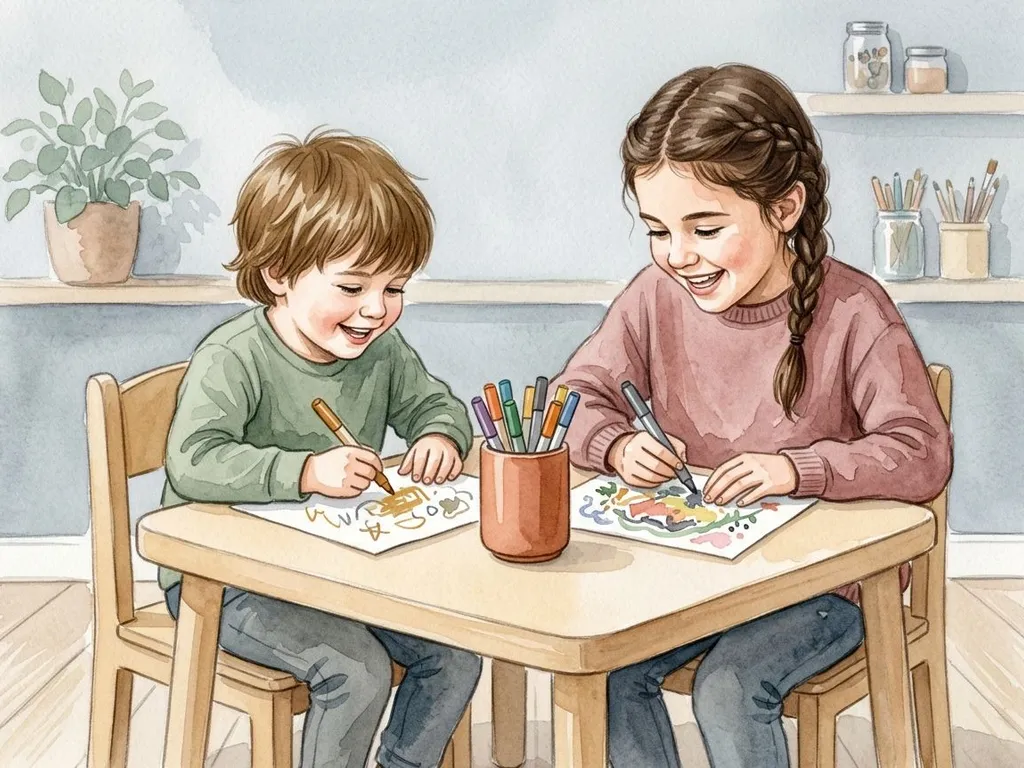
Most children need repeated exposure to irregular spellings before they can write them accurately from memory. Difficult words to spell for kids have spellings that do not match pronunciation, such as because, friend, said, enough, laugh, Wednesday, and beautiful. Children meet them in books, school tasks, games, captions, messages, and online lessons before spelling feels secure. A child may read because easily yet write becos. That is not laziness. English carries old spellings, borrowed words, and quiet letters. A calm ten-minute routine, repeated often, beats pressure.
📥 Tricky Spelling Word Pack
A printable practice set for noticing silent letters, doubled letters, vowel teams, and surprise spellings.
Leave your email — we'll send the PDF to your inbox.No spam — one email with your PDF. Unsubscribe anytime.
Why English Spelling Feels Uneven
English is not a “write what you hear” language. One sound can take many spellings: see, sea, piece, and chief. One letter can change its value, as in cat, city, and cake. Children need time to notice these shifts. For parents, difficult words to spell for kids works best when practice is short, visual, and repeated every week.
Data current as of June 2026. For parents, difficult words to spell for kids works best when practice is short, visual, and repeated every week.
Difficult words to spell for kids often carry history. Some words kept old spellings after speech changed. Others arrived through French, Latin, Greek, and other languages. That explains why enough sounds as if it ends in f but uses gh, and why knife starts with silent k.
Use this parent phrase: “This word has a tricky part. Let’s find it.” Your child becomes a word investigator, not a judged test-taker. Errors become clues: Which letters surprised us? Which part needs a picture, pattern, or practice?
A Teachable 60-Word List
This list works as a menu. A younger child may need five words from the first group. A school-age learner may use harder words in short paragraphs. Multilingual children may know a word’s meaning before spelling it, or spell a word before using it freely in speech.
Choose six to eight words for one week. Read them, say them, find each tricky part, write them, then use them in real sentences. The best list of difficult words to spell for kids contains words your child will meet again in reading, homework, and messages.
I stayed inside because it rained.
My friend helped me read.
We have enough pencils.
Wednesday is my music day.
Sleep is necessary.
Pronunciation can change spelling choices.
Teach the Tricky Part First
Children often spell most hard words correctly. The problem usually sits in one small place: ai in said, silent w in write, ie in friend, or the middle of necessary. Ask your child to circle, underline, or colour only that part. The task shrinks.
For younger children, say the word, clap the syllables, then show the spelling. For older children, compare word families: sign, signal, signature. A silent letter makes more sense when family links appear.
Across focused lessons, short word sets work best inside speaking, reading, and writing tasks. The child says the word, reads it in context, then writes it. Difficult words to spell for kids become communication, not just weekly quiz material.
Patterns Children Should Notice
Patterns reduce guessing. Start with one pattern at a time. If a child learns night, light, and right, avoid adding through the same day unless readiness looks clear. Both use gh, but the pronunciation pattern differs.
Silent letters appear in difficult words to spell for kids: knife, write, wrong, answer, island, climb, and should. Say each word naturally, then point to the quiet letter. Children may whisper the silent letter once before returning to normal speech.
Vowel teams need close looking: said, friend, beautiful, receive, and people. Ask your child to close their eyes and picture the middle. With gh words, sort carefully: laugh and enough use an f ending; night, though, and through do not.
Practice Without Turning It into a Battle
Keep practice short. Ten focused minutes can beat one long tired session. Say the word, discuss meaning, find the tricky part, write it once while looking, then write it once from memory. Finish with a real sentence.
For young learners, use movement and objects: build one with letter cards, jump for each letter in where, or place said beside a speech bubble. For school-age kids, sort words into groups. Ask short explanations: “Why is pronunciation hard? Which part should we watch?”
If your child speaks two or three languages, invite comparison without making English seem strange or wrong. You might say, “In Spanish, this vowel is written one way. In English, this word uses another spelling.” That respects existing knowledge and builds stronger language thinking.
Practice: Find the Tricky Part
Choose six words: because, friend, laugh, knife, different, Wednesday. Ask your child to read each word aloud, underline the letters that do not match the expected pronunciation, cover the word, write it from memory, and check. For a younger child, write a sentence together and let your child fill in only the target word.
Use Reading, Speaking, and Writing Together
Spelling improves when children meet the same word through different routes. A child who only copies beautiful may forget it by Friday. A child who reads it in a story, says “a beautiful picture,” and writes it in a birthday card connects meaning, pronunciation, and hand movement.
Try a three-step routine. First, read the word in a sentence. Second, say a new sentence aloud. Third, write another sentence. This helps difficult words to spell for kids gain context instead of sitting alone on a list.
Use the same method at home with everyday writing practice. Ask your child to add one target word to a shopping note, birthday message, game description, or homework sentence. When one word has different meanings or pronunciations, Cambridge Dictionary can help you check before making child-friendly examples.
Common Mistakes That Slow Progress
The first mistake: giving too many words. A long list can look serious, but often leads to guessing. Six words practised three ways can do more than twenty words copied once.
The second mistake: asking children to “sound it out” when pronunciation alone cannot solve the word. Blending letters helps with regular words, but one, said, enough, and people need memory and pattern work too.
The third mistake: correcting every error in a story or message. If your child writes a full paragraph, choose one or two target words. Praise the idea first, then teach the spelling point. Writing should still feel like a way to say something. LearnLink supports children aged 4-15, and more than 3,500 families use its lessons to build steady English practice.
- Choose five difficult words to spell for kids from today’s reading book.
- Practice each word aloud with syllable claps before writing it twice.
- Use a 10-minute timer to review tricky patterns without rushing.
- Ask your child to circle one confusing letter in each word.
- Repeat missed words tomorrow using a sentence your child creates.
Frequently Asked Questions
What Are Common Hard Spelling Words for Children?
Examples include because, friend, said, people, their, there, enough, different, beautiful, and necessary. These words are hard because spelling does not fully match pronunciation, or because they contain silent letters, vowel teams, or doubled letters. Start with words your child already uses in speech and reading.
How Many Difficult Spelling Words Should My Child Learn Each Week?
For children, 6 to 10 words a week is enough. Younger children may need 3 to 5. Older children can handle 10 to 12 if words are grouped by pattern and reviewed later. The right number is the number your child can practise without tears, rushing, or guessing.
What Should I Do If My Child Can Read a Word but Cannot Spell It?
Reading recognition often comes before accurate spelling. Ask your child to look closely, cover the word, write it, and check it. Then focus on the changed part. If your child writes frend, praise the sound logic, then teach that friend keeps the ie.
Do Online English Lessons Help with Spelling?
Online lessons help when spelling is taught through reading, speaking, and writing, not as a bare list. A tutor can hear how your child says a word, see which pattern causes trouble, and choose age-matched practice. Difficult words to spell for kids become easier when they appear often in clear sentences.
If your child needs steady speaking practice, start small — choose a free trial lesson.
Stay updated on our latest tips and resources by following us on Instagram LearnLink.