Body and Face Flashcards in English for Kids
Body and Face Flashcards in English: Words and Activities for Kids are picture-and-word cards for naming, pointing to, and discussing body parts. Start with familiar words such as eyes, nose, hand, and foot, then add short phrases and questions. Teach a small set through frequent review, movement, and speech. Multilingual children can compare English labels with words from other languages.
📥 Body and Face Flashcards in English
Point, say, move, and practise useful body and face words.
Leave your email — we'll send the PDF to your inbox.No spam — the PDF plus one short reminder. Unsubscribe anytime.
Start with Clear Body and Face Cards
When using Body and Face Flashcards in English: Words and Activities for Kids, show related cards in small groups. Each card below pairs a front label with a short prompt. The child reads the word, points to the body part, and follows the prompt. Parents can copy cards onto paper and add drawings or family-safe photos.
Touch your head.
Point to your face.
Touch your hair.
Close one eye.
Point to an ear.
Touch your nose.
Open your mouth.
Point to a tooth.
Show your tongue.
Tap your cheek.
Point to your chin.
Move your neck gently.
Begin with body parts your child can see and touch. Add chin and elbow after the first set becomes easy. Teach plural forms with the cards: eyes, ears, hands, and knees. Review feet and teeth separately because they lack the usual -s ending.
Tap your shoulder.
Raise your arm.
Bend your elbow.
Wave your hand.
Move one finger.
Point to your chest.
Stretch your back.
Touch your stomach.
Lift one leg.
Bend your knee.
Stamp your foot.
Wiggle your toes.
Turn Body-part Labels into Spoken English
Body and Face Flashcards in English: Words and Activities for Kids build speech when each word leads to a sentence. After your child identifies nose, ask for “This is my nose.” After showing hands, prompt “These are my hands.” The sentence moves practice from recognition to speech.
Ask questions with direct answers. “Where is your elbow?” prompts pointing. “What can your legs do?” prompts verbs such as walk, run, jump, and kick. Older children can add detail: “My knees bend when I sit down.” Accept a correct short answer before requesting a longer one.
Model natural phrases instead of testing every card. Say “Wash your hands,” “Brush your teeth,” or “My back is straight.” Daily examples give body vocabulary a purpose beyond the deck.
Choose Body Vocabulary Activities by Age
Reading skill, confidence, and English experience matter more than age, but tasks should grow with the learner. Young children need movement and quick turns. Readers can match labels with pictures. Older learners need descriptions, speed, and full sentences.
For families using Body and Face Flashcards in English: Words and Activities for Kids, the right pace keeps recall accurate and practice engaging. A 5-year-old might enjoy “Touch your knees.” A 12-year-old can explain, “You use your knees when you climb stairs.” One card supports different speech levels.
Practise Body Words Through Movement and Play
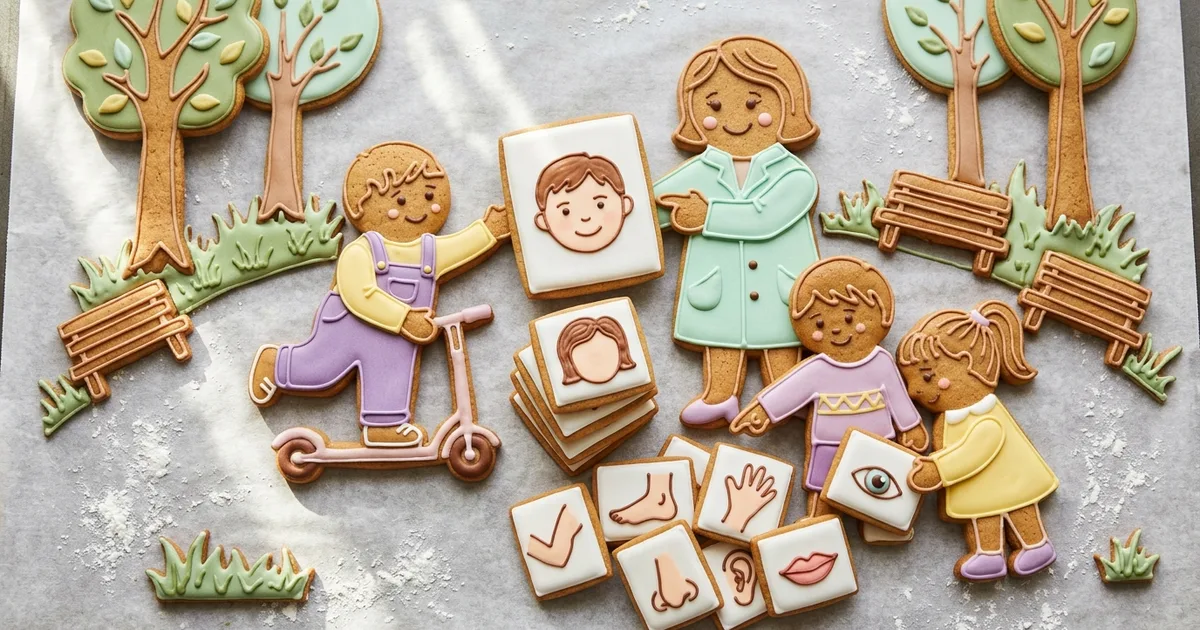
Place cards on a table or floor. Say, “Find the shoulder card, then touch your shoulder.” Switch roles so your child gives the instruction. Try memory pairs, walking card races, drawing a person from spoken instructions, or sorting cards into face, upper body, and lower body.
Point, Say, Switch
Show a card. Your child points to the body part, then says the word in a sentence. Switch roles: the child shows the card and checks your response. Occasionally give a playful wrong answer for the child to correct: “No, that is your elbow!”
Fit short practice into daily routines. Review face, hair, and teeth while getting ready, or arms, legs, and feet before going outside. During LearnLink lessons, our tutors use the same move-and-say pattern while adapting questions to each child’s age and confidence.
Correct Common Body-Part Vocabulary and Grammar Mix-Ups
English word boundaries cause some mistakes. A child may call the whole arm a hand or use leg for foot. Show both cards and trace the boundary: the hand begins at the wrist, while the foot begins at the ankle. Keep the explanation physical and brief.
- foot → feet: “One foot, two feet.”
- tooth → teeth: “One tooth, many teeth.”
- finger and toe: Fingers are on hands; toes are on feet.
- hair: Use hair for all the hair on someone’s head and a hair for one strand.
- this and these: “This is my ear” but “These are my ears.”
Correct with a direct model. If your child says, “This are my eyes,” respond, “Yes, these are your eyes,” and invite one calm repeat. Long grammar explanations interrupt speech. Repeating the correct form across cards reinforces the pattern.
A multilingual child may use another language when the English word is missing. Acknowledge the idea, give the English label, and continue: “Yes, that is your chin. Chin.” Comparing labels across languages turns existing knowledge into a memory cue.
- Practice singular and plural pairs with six flashcards before bedtime.
- Use a mirror to contrast face, head, and hair with children ages four to seven.
- Sort eight cards into singular and plural grammar groups together.
- Try “This is” and “These are” sentences during a two-minute game.
- Correct one mix-up gently, then repeat the full sentence three times.
When a word has several meanings or pronunciations, Cambridge Dictionary is a useful check before turning it into child-friendly examples.
Frequently Asked Questions
How Many Body Flashcards Should My Child Learn at Once?
Begin with five to eight familiar cards for a young or first-time learner. Add cards when your child identifies most of the set without a long pause. Older or confident learners may handle larger groups, but accuracy matters more than deck size. Mix old and new words in every session.
Should the Picture or the Written Word Appear First?
For children who are not confident readers, show the picture first and place the word beneath it or on the back. Readers can practise picture to word and word to meaning. Keep Body and Face Flashcards in English: Words and Activities for Kids flexible: cover the label during speaking and reveal it when support is needed.
What Should I Do If My Child Pronounces a Body Word Incorrectly?
Give a natural model and request one repeat. For mouth, let your child watch the tongue move forward for the final sound. For teeth, practise the ending slowly, then return to the word. Ignore small accent differences if the word remains understandable. Revisit difficult sounds during another short session.
How Can Body Flashcards Stay Interesting for Older Children?
Replace naming with clues, timed sorting, and descriptions. An older child can define a word without saying it: “It joins your hand to your arm” for wrist. Children can build instructions, compare singular and plural forms, or draw characters from a partner’s description. Increase the thinking and speaking challenge with the learner.
- Start with five to eight familiar cards and add new words only after recall becomes accurate.
- Practise each word through pointing, movement, and one short spoken sentence.
- Try a quick review during a daily routine, then reuse difficult cards in the next session.
If your child needs steady speaking practice, start small — choose a trial lesson.
Stay updated on our latest tips and resources by following us on Instagram LearnLink.