Christmas Words in English for Kids
Christmas Words in English for Kids: Vocabulary and Activities combines holiday nouns, action verbs, greetings, and short games for home or lessons. Begin with visible or active words: tree, star, gift, wrap, and sing. Use them in phrases rather than testing isolated labels. Traditions vary by country, climate, and faith, so match vocabulary to your family. An Australian child may associate Christmas with sunshine; a German child may picture a winter market. Both belong in the lesson.
📥 My Christmas Word Practice Pack
Learn, say, and use festive English at home
Leave your email — we'll send the PDF to your inbox.No spam — the PDF plus one short reminder. Unsubscribe anytime.
Core Words and Phrases to Teach First
Start with concrete nouns before abstract ideas such as tradition or celebration. Objects, family photos, drawings, and toy figures show meaning without translation. With Christmas Words in English for Kids: Vocabulary and Activities, select a small group from the categories below. Add words after your child recognises the first group.
Christmas tree, star, lights, ornament, wreath, stocking, candle, bell, ribbon
Santa Claus, Father Christmas, elf, angel, snowman
present, gift, toy, card, wrapping paper, box
decorate, wrap, open, give, share, hang, celebrate, sing
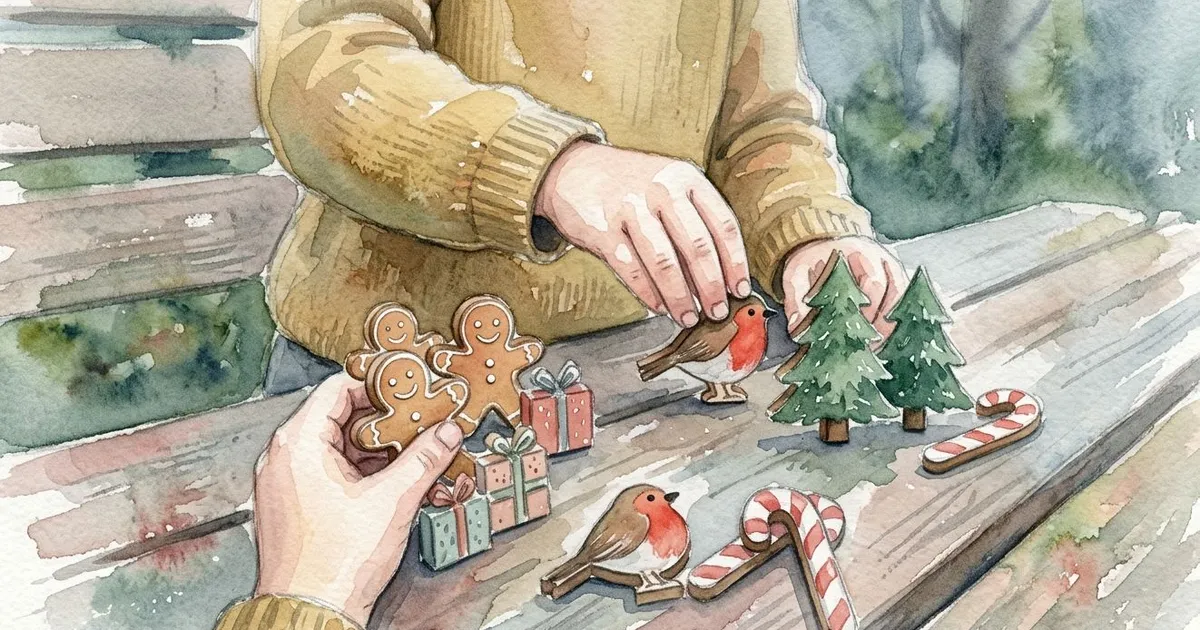
winter, snow, gingerbread, candy cane, biscuits, cookies, hot chocolate
Merry Christmas, Happy Christmas, Happy holidays, Christmas Eve, Christmas Day
Vocabulary can reflect cultural choices. Santa Claus and Father Christmas name related figures, but families may prefer one form. Cookies appears in North American English; biscuits appears in British English. Teach the form your child will hear most, then introduce the alternative as correct.
Putting Christmas Vocabulary into Context
The next step in Christmas Words in English for Kids: Vocabulary and Activities turns labels into messages. A child who knows star can learn, “The star is on the tree.” The sentence connects vocabulary with grammar, word order, and purposeful speech.
- We decorate the tree with lights.
- I am wrapping a present.
- There is a card on the table.
- There are three stockings by the door.
- The children are singing a Christmas song.
- We share food with our family and friends.
Build questions from the words: “What is under the tree?”, “Who is holding the gift?”, or “Which ornament is red?” Younger children can answer with one word, then a sentence. Older learners can compare customs: “In our family, we open gifts on Christmas morning,” or “We celebrate with our relatives on Christmas Eve.”
Activities That Suit Different Ages
Christmas Words in English for Kids: Vocabulary and Activities should differ at four and fourteen. Young learners need movement, pictures, and repetition. Older children can sort vocabulary, describe traditions, and write with purpose. Keep the language goal specific during play.
Siblings can use one picture at different levels. A five-year-old might name tree, bell, and gift. An older child can locate the objects or write a scene. The family shares one activity while each learner receives a suitable challenge.
Simple Practice Ideas for Home
Short, repeated practice beats one long session. Place word cards near familiar objects, play a two-minute guessing game, or find something red, shiny, or round. Revisit the words later, changing the task from pointing to speaking, then writing.
Christmas Bag Challenge
Put safe objects or picture cards in a bag. Your child takes one without showing it and gives clues: “It is small. It makes a sound. We hang it on the tree.” Players guess, “Is it a bell?” Younger children may offer one clue; older learners should give a full description.
Prompt recall before helping. If your child pauses, show the first sound, offer two choices, or point to a picture instead of giving the answer. In LearnLink lessons, our online tutors revisit familiar words through new questions and situations, helping children use vocabulary rather than recite a fixed list.
Pronunciation and Common Mistakes
Correct errors that block meaning without interrupting every sentence. Model the form and continue: child, “Two gift”; adult, “Yes, two gifts.” The correction teaches grammar without turning conversation into a test.
- Christmas is usually pronounced “KRIS-muhs”; the t is silent.
- Present, meaning a gift, has stress on the first part: “PREZ-uhnt.”
- Use a gift for one and gifts for more than one.
- Say Christmas trees, not Christmases trees.
- Snow is usually uncountable: “There is snow outside,” not “There are snows.”
- Both Merry Christmas and Happy Christmas are correct; usage varies by place and family.
Check meaning alongside pronunciation. A child may pronounce wreath without knowing the object. Ask the child to point, draw, choose, or create a sentence. Meaning comes first; an understandable accent matters more than imitation.
- Practice five Christmas words with children aged six to nine daily.
- Clap syllables in reindeer, stocking, and Christmas before reading aloud.
- Use a mirror to compare mouth shapes for tricky consonant sounds.
- Record three words, replay them, and correct one sound each time.
- Avoid adding extra vowels after final consonants in gift and elf.
When a word has several meanings or pronunciations, Cambridge Dictionary is a useful check before turning it into child-friendly examples.
Frequently Asked Questions
How Many Christmas Words Should My Child Learn at One Time?
Use Christmas Words in English for Kids: Vocabulary and Activities as a bank, not one assignment. A young beginner may study a small set; an older learner can handle more. Continue when your child recognises the words and uses them in phrases. Revisit earlier vocabulary in later games instead of relying on one test.
What If Our Family Does Not Celebrate Christmas?
Your child can study Christmas vocabulary as cultural knowledge without celebrating. Explain customs found in books, films, shops, or school events, then compare them with your family’s festivals. Use neutral sentences such as, “Some families decorate a tree.” Children need not present another family’s beliefs or customs as their own.
Should I Correct Every Vocabulary or Pronunciation Mistake?
No. Correct mistakes that change meaning, cause confusion, or recur. For minor slips, repeat the sentence correctly and continue. During focused practice, choose one target, such as plural -s or the pronunciation of Christmas. Excessive correction can reduce a child’s willingness to speak.
How Can We Practise If My Child Does Not Enjoy Flashcards?
Use objects, drawing, movement, songs, menus, gift labels, or picture searches. Decorate a paper tree while naming each item, describe a festive shop window, or exchange clues in a guessing game. Older children can write a message, compare celebrations in two countries, or plan an imaginary event.
Start your child's English journey today — book a trial lesson with LearnLink.
Stay updated on our latest tips and resources by following us on Instagram LearnLink.