How to Teach English to Kids
Children learn English through hearing, saying, seeing, and using real language in short daily steps, so how to teach english to kids starts with brief lessons, steady routines, and words they can use now. A 5-year-old may need songs, toys, movement; a 12-year-old may need choices, topics, reasons. Both need warm correction, listening, and safe practice. At home, parents do not need to become teachers. Keep English present, calm, and useful between lessons.
Start with Listening Before Speaking
Children need repeated English input before easy speech. A child may understand “Put on your shoes” or “Choose a red pencil” before answering in a full sentence.
For young children, use short action phrases: “Wash your hands,” “Open the book,” “It is your turn.” For older children, add choices: “Do you want to read first or draw first?” This gives language plus control.
If you are planning how to teach english to kids at home, begin with 5- to 10-minute listening windows. Repeat one story, song, or short video. Repetition works when the task changes: first listen, then point, then act, then say one line.
Choose Useful Words, Not Long Word Lists
Vocabulary sticks when it fits a child’s day. Start with words they can touch, see, eat, wear, or need. “Cup,” “blue,” “hungry,” “again,” and “help” beat rare animal lists. For parents, how to teach english to kids works best when practice is short, visual, and repeated every week.
For preschool kids, choose 6 to 8 words at a time. For school-age kids, use 8 to 12 words plus sentence frames. Link words to school, hobbies, travel, games, books, or family plans.
Use a Simple Lesson Shape at Home
A steady shape helps children relax. Try this order: hear it, see it, say it, use it. Play a 30-second audio clip, show three picture cards, ask your child to repeat two words, then use one word in a tiny game. For parents, how to teach english to kids works best when practice is short, visual, and repeated every week.
With food words, put an apple, bread, milk, and rice on the table. Across LearnLink lessons, our tutors help children build confident, everyday English step by step. For parents, how to teach english to kids works best when practice is short, visual, and repeated every week.
This lesson shape works across LearnLink lessons, where tutors build from child understanding toward child speech. In online lessons with LearnLink tutors, this steady pattern helps first-time online learners know the next step.
Make Speaking Low Pressure
Some children speak quickly. Others wait, watch, and answer after trust grows. Silence is not failure; it may mean the child still sorts sounds, meaning, and confidence.
Use supported speaking before open speaking. Instead of asking, “What did you do today?” try “I played ___” and offer two choices: “football or a game?” The child can point, choose, or say one word. Then model the full sentence.
When parents ask how to teach english to kids without making them shy, the answer often means lower performance pressure. Let your child speak to a toy, record one sentence, read with you, or choose from cards. A safe first sentence beats a forced long answer.
Practice: The Three-choice Talk
Choose one topic, such as animals. Say, “I like cats,” then give your child three choices: “cats, dogs, or birds?” After the child answers, build one step: “You like dogs. Big dogs or small dogs?” Keep it under five minutes and stop while the child is still willing.
Teach Grammar Through Patterns
Children do not need long grammar talks at first. They need reusable patterns: “I like…,” “I can…,” “I have…,” and “There is…” give children tools for many topics.
With younger children, keep grammar inside play. Put toy animals in a bag and say, “I have a lion.” Let your child pull one out and copy the pattern. With older children, compare two patterns: “I like swimming” and “I want to swim.” Then ask for sentences about real interests.
Keep correction light. If a child says, “She like pizza,” answer, “Yes, she likes pizza,” with small stress on “likes.” You corrected the sentence without turning the moment into a test.
Build Reading and Writing from Known Speech
Reading feels easier when words sound familiar. If your child can say “red car,” “small dog,” and “big house,” those phrases make strong first reading cards. Printed words should not feel like another language above speech.
For younger kids, match words to pictures and read short home labels: door, bed, bag, book. For school-age kids, use short messages: “Can you find the blue pen?” For older kids, use purposeful short texts, such as a recipe, game rule, or travel plan.
Writing can start with copying, tracing, typing, or gap filling. A child who writes “I like ___” five times with true answers does stronger work than a child copying a full paragraph without meaning.
Keep Practice Short, Regular, and Visible
Ten calm minutes most days can help more than one long Sunday session. Children need frequent English contact so sounds and words stay fresh. Try a weekly rhythm: two lesson days, two short review days, one story or song day, and rest days.
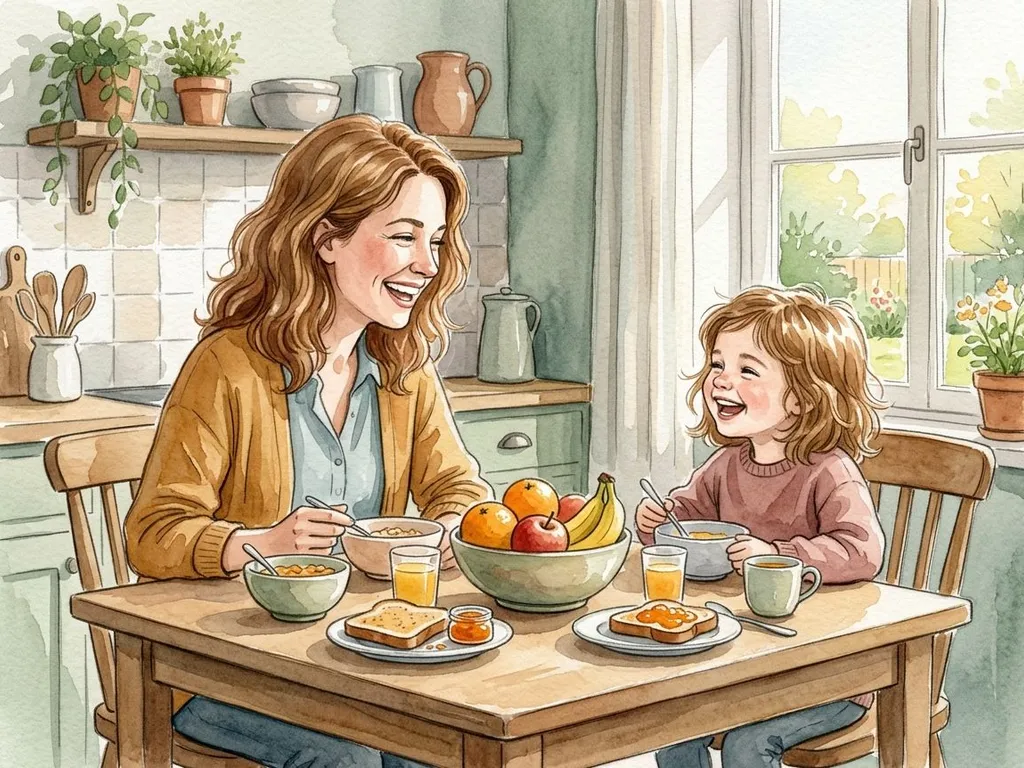
Put English where family life happens. Say colors while choosing clothes, count fruit at breakfast, name rooms while tidying, or ask one English question in the car. Language becomes part of daily life, not a separate burden.
If you are choosing how to teach english to kids in a multilingual home, keep family languages. Strong home languages support thought, memory, and identity. English can grow beside them when the child knows which language is being used and why.
Practice: Five-minute Word Basket
Place five objects in a basket: a spoon, a toy, a sock, a pencil, and a book. Name them together. Then ask your child to close their eyes while you remove one object. Ask, “What is missing?” Older children can answer with a full sentence: “The spoon is missing.”
Use Screens with a Clear Job
Online tools help when each has a purpose. A song can train rhythm and sound. A short cartoon can build listening. A live lesson can give turn-taking, correction, and real conversation.
Passive screen time teaches less than active use. After a video, ask your child to point to three things, copy one line, draw one scene, or tell you whether a character is happy, tired, or hungry. Keep the task small enough to finish.
For first-time online learners, keep the setting calm: headphones if needed, a quiet table, water nearby, and one familiar object to show the tutor. Children speak more easily when the online space feels predictable.
- Choose one five-minute cartoon clip and repeat three useful phrases together.
- Pause after each scene and ask your child one simple question.
- Use subtitles for ages seven and up, then replay without them.
- Practice three new words from the video with toys afterward.
- Set a ten-minute timer and stop when the learning job ends.
When a word has several meanings or pronunciations, Cambridge Dictionary is a useful check before turning it into child-friendly examples.
Frequently Asked Questions
What Is the Best Age to Start English?
Children can start hearing English in the early years, but age depends on attention, routine, and family goals. A 4-year-old can learn songs, colors, actions, and phrases. A 10-year-old can learn faster through reading, topics, and patterns. Do not rush. Start with short, positive contact and build from there.
How Much English Practice Does a Child Need Each Day?
For most children, 10 to 15 minutes of focused practice works on non-lesson days. Younger children may do better with two 5-minute moments. Older children can handle 20 minutes if the task has variety. When deciding how to teach english to kids, regular practice matters more than long practice.
Should Parents Correct Every Mistake?
No. Correct mistakes that block meaning or match the day’s goal. If your child is practising “I like…,” focus on that pattern and let smaller errors pass. Too much correction can make children speak less. Repeat the sentence correctly and keep the conversation moving.
What If My Child Mixes English with Another Language?
Mixing languages is common in multilingual children. It often shows the child using all available language tools to communicate. You can answer in English with the word they need: if your child says, “I want agua,” you can say, “You want water. Here is water.” This gives the English word without shame.
Start your child's English journey today — book a trial lesson with LearnLink.
Stay updated on our latest tips and resources by following us on Instagram LearnLink.