Is Grammar Homework Still Essential for Kids?
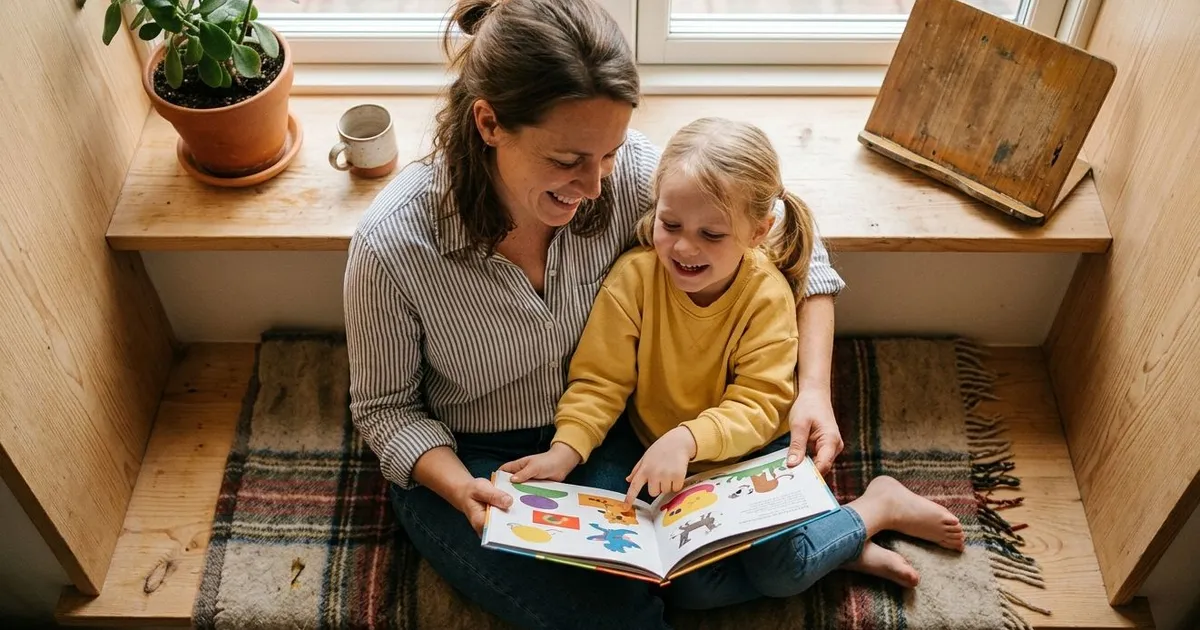
Grammar homework still works when it is short, focused, and tied to speech or writing; Is Grammar Homework Still Essential for Kids? has a practical answer: yes, when it helps children use English with control, not when it becomes pages of drills. A 6-year-old may need five minutes of sentence sorting. A 12-year-old may edit one paragraph. A teen may use grammar to sharpen school writing. For families new to online learning, the aim is not another test. The aim is pattern recognition, safe practice, and reuse.
📥 Grammar Homework Mini Pack
Four short print-and-practice activities for children learning English grammar at home
Leave your email — we'll send the PDF to your inbox.No spam — the PDF plus one short reminder. Unsubscribe anytime.
What Children Need to Understand First
Children do not learn grammar well as labels. They learn it when a rule explains a message they want to say. “I am playing” fits a game description. “She went” fits a story about yesterday.
For younger children, grammar homework should start with meaning: who, action, time, and number. Names can come later. A 5-year-old does not need a lecture on auxiliary verbs, but the child can hear the difference between “He is running” and “He runs every day.”
For older children and teens, rule names help. They give the child a map for writing, reading, and school tasks. This is where Is Grammar Homework Still Essential for Kids? becomes a design question: homework must connect the rule, the example, and the child’s own sentence.
How Grammar Homework Should Work
Good grammar homework has three parts: a model, a choice, and a reason to use the form. The model shows the pattern. The choice makes the child think. The reason gives the task meaning. Example: “Choose am, is, or are, then write one sentence about your room.”
Across LearnLink lessons, grammar sticks when children meet it in speaking, reading, and short writing, not only worksheets. A child may hear “There is” and “There are” in a picture task, use the forms in a game, then write three true sentences at home.
Length matters. A tired child will not learn more from a longer page. Ten accurate, checked sentences can teach more than forty rushed ones. So the sharper version of Is Grammar Homework Still Essential for Kids? is: what kind of grammar homework deserves time each week?
Rules and Examples by Age
Grammar can be taught from age 4 to 15, but the task must fit the stage. Young children need patterns they can hear and act out. Primary-age children need short examples and picture support. Teens need grammar for opinions, comparisons, and careful writing.
The table shows how one grammar idea can grow with the child. It is not a strict level chart. A bilingual 7-year-old may move quickly through some forms and need more time with others. The right pace leads to correct use.
This age view also answers Is Grammar Homework Still Essential for Kids? fairly. The same worksheet cannot serve a 5-year-old, a 9-year-old, and a 14-year-old. The goal is steady growth, not one fixed method.
Common Mistakes Children Make
Grammar mistakes often show a child testing a rule, not failing. “He goed” shows the child has noticed that English often adds -ed for the past. Next, teach irregular verbs: go becomes went, have becomes had, and make becomes made.
Children who speak two or three languages may bring habits from another language into English. Sometimes this helps. Sometimes it creates errors: “She has 8 years” instead of “She is 8,” or “I have cold” instead of “I am cold.” These errors need calm correction and repeated natural examples.
Another problem is knowing the rule but missing it in speech. That is normal. Speech moves fast. Homework should include quick oral practice: read, cover, say, check. Written grammar and spoken grammar should support each other.
What Useful Homework Looks Like
Useful homework is short enough to finish with care and simple enough for a parent to support without becoming the teacher. One page, one grammar point, and one speaking task is often enough: fill five gaps, write three true sentences, then say them aloud to a parent.
Children also need feedback. If no one checks the homework, mistakes can settle in. Feedback can stay light: one strong sentence, one correction, and one pattern to practise next. In online lessons with LearnLink tutors, this follow-up keeps grammar linked to real use.
Is Grammar Homework Still Essential for Kids? is not a call for more worksheets. It is a call for stronger tasks. Homework should send a child back to class ready to speak, read, or write with more confidence and control.
Practice Activities to Try at Home
These activities ask children to notice, choose, and say the answer aloud. Parents do not need a long grammar lesson. Read the model, let the child try, and correct one pattern at a time.
For younger children, keep the pace light and stop before fatigue. For older children, ask for one reason: “Why did you choose is?” or “How do you know this is past?” A short explanation shows whether the rule is understood.
Fill in the Blank
Choose am, is, or are: 1. I ___ ready. 2. She ___ in the kitchen. 3. They ___ happy. 4. The books ___ on the desk. 5. My brother ___ seven.
Change the Time
Rewrite each sentence in the past: 1. I play football. 2. We visit grandma. 3. She watches a film. 4. They walk to school. 5. He opens the door.
Say Your Own Sentence
Use because, but, or so to finish each idea: 1. I like English because ___. 2. I wanted to play, but ___. 3. It was raining, so ___. Then read your sentences aloud.
How Parents Can Support Without Doing the Work
A parent’s role is to keep the routine calm and predictable. Set a short time, remove distractions, and ask the child to read the example first. If the child is stuck, point back to the model before giving the answer.
Correction should be specific. “Check the verb after he” helps more than “This is wrong.” When children know where to look, they start editing their own work. That skill reaches beyond one grammar page.
If homework regularly ends in tears, the task may be too long, too hard, or disconnected from the lesson. Then Is Grammar Homework Still Essential for Kids? should be discussed with the tutor or school. The answer may be yes, but the format needs to change.
- Try one five-minute grammar check after reading a favorite chapter book.
- Ask your 8- to 10-year-old to explain one corrected sentence.
- Use three colored pencils to mark nouns, verbs, and punctuation.
- Practice fixing two sentences together, then let your child revise independently.
- Celebrate one clear improvement before discussing the next grammar goal.
For the rule wording, Wikipedia — English Grammar is a useful reference while the practice examples here stay adapted for children.
Frequently Asked Questions
How Much Grammar Homework Should a Child Do Each Week?
For school-age kids, five to ten minutes at a time is usually enough. school-age kids can often manage ten to fifteen minutes. Older children may work longer when the task has a defined purpose. Two short, checked tasks in a week can beat one long rushed page.
Should Grammar Be Corrected During Speaking?
Yes, but lightly. If every sentence is interrupted, children may stop trying. Let the child finish, repeat the sentence correctly, and ask the child to say it again. If the child says “She go,” the adult can answer, “Yes, she goes to school. Say it with me: she goes.”
Is Grammar Homework Still Essential for Kids? If They Already Speak English Well?
Yes, it still has value for children who speak fluently but write less accurately. Grammar homework helps children notice small forms: third-person -s, past tense endings, articles, and sentence links. The task should support writing and school work, not repeat rules the child already uses well.
What If My Child Hates Grammar Worksheets?
First, reduce the load and change the format. Try sentence cards, oral correction, picture prompts, or a short editing task. Children may dislike grammar because the task feels abstract. Link grammar to a real message: describing a pet, planning a weekend, or explaining a game.
Can Parents Help If They Are Not Native English Speakers?
Yes. Parents can set the routine, check that the child followed the model, and ask the child to read answers aloud. Perfect English is not required for good habits. If a correction is unclear, mark the sentence for the tutor and ask the child to bring it to the next lesson.
Start your child's English journey today — book a trial lesson with LearnLink.
Stay updated on our latest tips and resources by following us on Instagram LearnLink.