Footwear Vocabulary for Kids
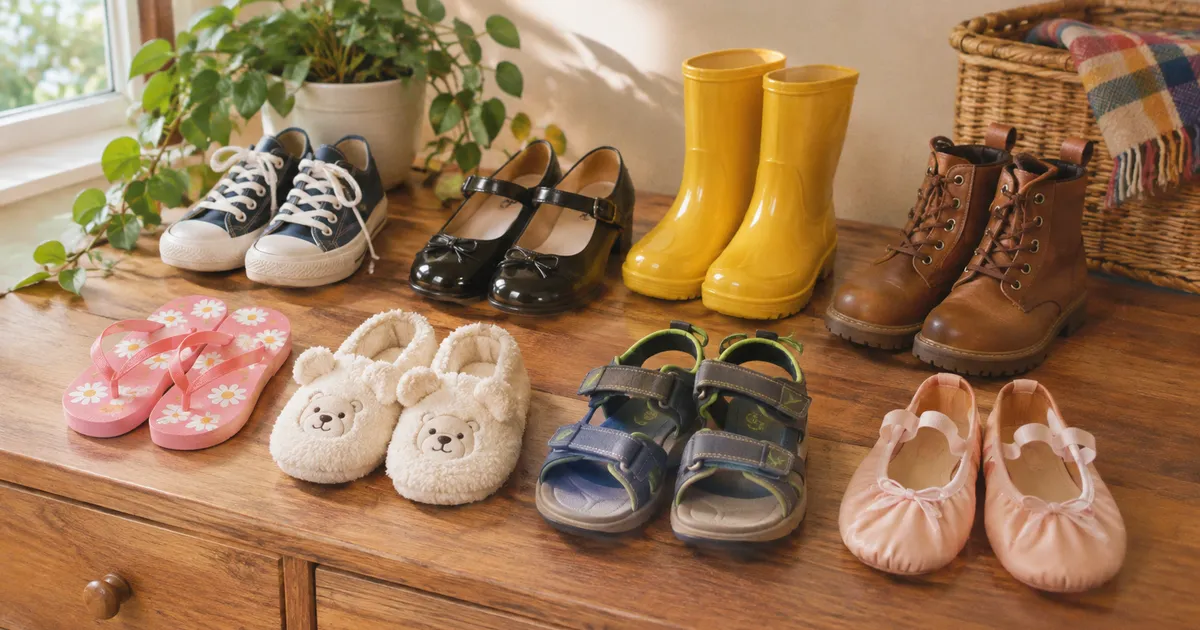
A first lesson needs five visible items and three action phrases. English Shoe and Footwear Vocabulary for Kids: Words and Activities covers footwear, shoe parts, and dressing actions. Show a shoe, laces, a sole, a strap, and a matching pair. Practise “put on,” “take off,” and “These shoes are too small.” Real objects clarify meaning. Multilingual children may compare words, but practice should return to one short English sentence for home, outdoors, or lessons.
Core Shoe Words to Teach First
English Shoe and Footwear Vocabulary for Kids: Words and Activities starts with familiar footwear before smaller parts. Teach words your child needs now. Sandals suit warm climates; waterproof or insulated footwear suits colder, wetter places.
Teach singular and plural forms together: one shoe, two shoes; one boot, two boots. A pair is one unit: “This pair is new.” The items are plural: “These shoes are new.” Trainers and sneakers name the same broad footwear type in different varieties of English. Children can understand both and use their family’s or school’s form.
Useful Phrases and Examples in Context
In English Shoe and Footwear Vocabulary for Kids: Words and Activities, children combine nouns with actions and descriptions. Model a phrase while performing its action. Your child copies the movement, repeats the sentence, then applies it to another footwear type.
- Put on your shoes.
- Take off your boots.
- Tie your laces.
- Untie the knot.
- Fasten the buckle.
- Do up the strap.
- Try on this pair.
- These shoes fit well.
- These sandals are too loose.
- My boots are too tight.
- Which shoe goes on your left foot?
- Where is the other slipper?
Contrast words help children choose footwear: big and small, clean and dirty, wet and dry, light and heavy, tight and loose. Ask questions requiring speech, not pointing: “Which pair is dry?” or “Why are you choosing that pair?” A younger child might answer, “The ground is wet.” An older child can expand: “I am choosing them because it is raining.”
Activities for Different Ages
For English Shoe and Footwear Vocabulary for Kids: Words and Activities at ages four to six, use movement and sorting. Place two or three pairs on the floor. Ask your child to find a shoe, match two slippers, or point to a buckle. Play “Do what I say” with safe prompts: “Touch the sole” and “Pretend to tie the laces.”
For ages seven to ten, create a shoe shop with footwear from home. One person asks, “What size do you need?” or “Would you like sandals or trainers?” The other replies, “I would like the black trainers, please.” Switch roles to practise questions and answers. Add play-money price labels without turning the activity into a maths test.
For ages eleven to fifteen, compare footwear by purpose, material, weather, and style. Ask the learner to pack three pairs for an imaginary trip and explain each choice: “I would take sandals for warm days, trainers for walking, and waterproof shoes for wet weather.” Older learners can compare regional terms such as trainers and sneakers or zip and zipper.
Short Practice Routines at Home
Short routines make English Shoe and Footwear Vocabulary for Kids: Words and Activities part of daily speech. Choose four words and practise them for several days. At the door, ask, “Which pair do you need?” When storing footwear, ask your child to sort it by type, colour, owner, or season and explain the rule.
Five-round Shoe Detective
Hide one pair. Give five clues, one at a time: type, colour, fastening, purpose, and location. For example: “They are boots. They are brown. They have zips. I wear them in wet weather. They are under the bench.” Your child guesses the pair, then gives the next clues.
Reuse words the next day in new sentences instead of requesting a memorised list. If your child says “shoes,” expand it to “These are my shoes” or “I put on my shoes.” In LearnLink lessons, tutors adapt this pattern to each child’s speaking level, while families repeat the phrases during daily routines.
Common Mistakes and Simple Corrections
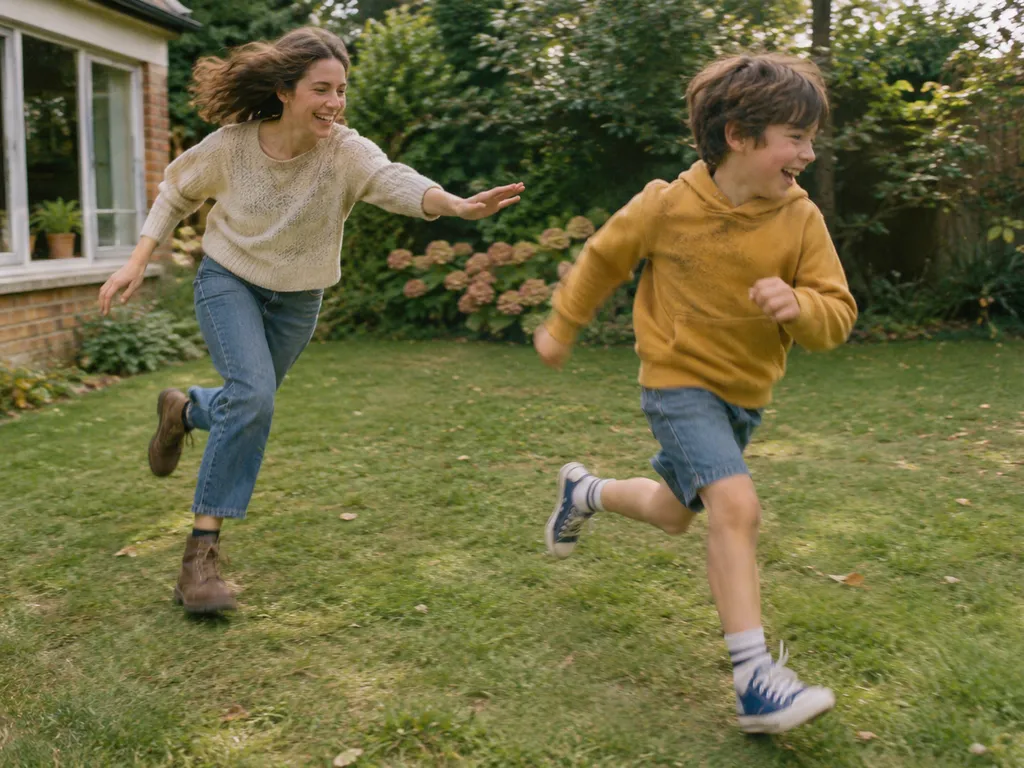
Children may confuse foot and feet. Contrast “one foot, two feet.” Shoe and boot are countable, while footwear usually functions as an uncountable group word. Use “footwear” or name the items directly. “Two shoes” sounds more natural for children than “two items of footwear.”
Wear describes clothing already on the body; put on describes the action. Compare “I wear trainers at the park” with “I am putting on my trainers now.” Take off names the opposite action. If a child says, “I wear my shoes now,” model: “Yes, you are putting on your shoes now.” The correction preserves conversation.
Do not mark trainers, sneakers, rain boots, wellies, zip, or zipper as wrong because your family prefers another form. Explain the difference and retain both forms. Correct meaning before accent or speed. “My shoe is too small” communicates a clear problem. Extend the sentence instead of replacing it with a harder one.
- Sort five pairs of shoes, naming each type aloud together.
- Point to one shoe and practice singular and plural forms.
- Match four footwear pictures with labels from a familiar English book.
- Correct mix-ups by repeating the word, then using it in a sentence.
- Ask your child to describe color, material, and purpose for three items.
When a word has several meanings or pronunciations, Cambridge Dictionary is a useful check before turning it into child-friendly examples.
Frequently Asked Questions
How Many Shoe Words Should My Child Learn at Once?
For English Shoe and Footwear Vocabulary for Kids: Words and Activities, begin with four to six visible words. A young beginner might learn shoe, boots, sandals, laces, sole, and pair. Add words after the child understands the first set in short phrases. Older learners can handle larger sets but still need examples and speaking practice, not a long list to memorise.
Should My Child Learn “Trainers” or “Sneakers”?
Teach the word your child will hear most, then introduce the regional alternative. Trainers is widespread in British English and other English-speaking settings; sneakers is widespread in American English. Neither is wrong. Your child can say, “We call them trainers at home, but other people say sneakers,” building flexible vocabulary for international conversations.
How Can We Practise Footwear Words Without Worksheets?
Use footwear from home. Ask your child to match pairs, sort shoes by fastening, choose footwear for imagined weather, or describe a hidden item. Dressing routines provide natural repetition: “Put on your shoes,” “Tie your laces,” and “Are these too tight?” Keep rounds brief and let your child ask questions. No new materials or special equipment are needed.
What Should I Do If My Child Mixes English with Another Language?
Accept the meaning, then supply the missing English word in a full sentence. If your child uses another language for sandals, respond, “Yes, those are sandals. The sandals have red straps.” Invite one repetition without demanding it after every correction. Multilingual children may choose the quickest available word. A calm English model keeps conversation moving and provides a reusable phrase.
For the next seven days, choose four words, practise them for five minutes, and ask your child to use each in a complete sentence. Review the four words the following day before adding two new ones.
If your child needs steady speaking practice, start small — choose a trial lesson.
Stay updated on our latest tips and resources by following us on Instagram LearnLink.