Synonyms for Kids Examples and Activities
Synonyms are words with close meanings, such as big and large, and synonyms for kids should begin with pairs children can hear, say, read, and act out. For young learners, synonyms are not a list to memorise. They make speech sharper: happy can become glad, fast can become quick, and small can become tiny. In LearnLink lessons, tutors teach synonyms through stories, pictures, games, and short writing tasks, so children meet each word in context before using it alone.
📥 Synonym Word Cards for Kids
Build richer vocabulary with simple synonym groups, quick examples, and a weekly practice tracker.
Leave your email — we'll send the PDF to your inbox.No spam — the PDF plus one short reminder. Unsubscribe anytime.
Core Word Pairs to Start With
The first set of synonyms for kids should use words children know from home, school, and play. Start with one base word, then add one close match: big and large, small and little, happy and glad, sad and unhappy, fast and quick, slow and not fast, funny and silly, smart and clever.
For children aged 4 to 7, tie each pair to an action or object: a large teddy, a little spoon, a quick jump, a silly face. For children aged 8 to 11, add word choice: large sounds more careful than big, and clever may fit a puzzle more than a nice drawing.
Older children, around 12 to 15, can sort synonyms by tone. Angry, cross, and furious differ in strength. Good, useful, strong, kind, and fair can praise something, but each word has a different job. Here, synonyms for kids become a bridge from basic vocabulary to stronger speaking and writing.
Useful Groups by Meaning
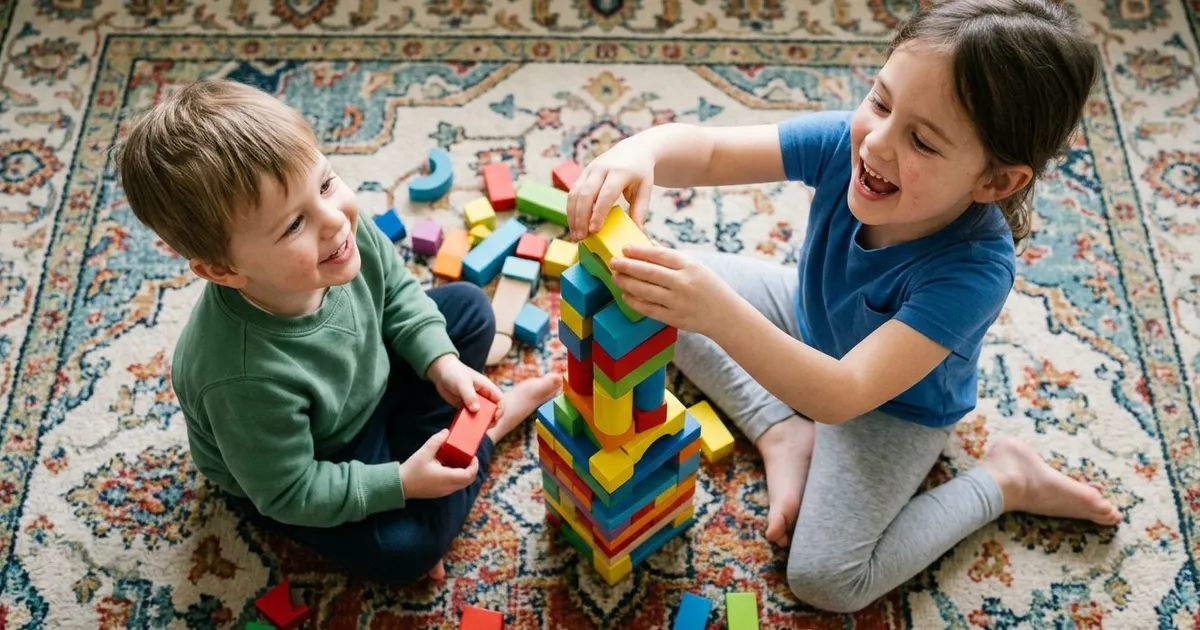
Grouping synonyms by meaning helps children notice patterns and keeps a lesson from turning into a loose word list. A child can learn words for size, speed, feelings, sound, and quality, then use each group in short sentences.
Here is a compact starter set for home practice:
Vocabulary cards for practice
The large box is under the table.
A tiny bird sat on the wall.
She gave a quick answer.
He was pleased with his drawing.
The child felt nervous before the show.
That is a useful idea.
The music was too noisy.
When teaching synonyms for kids, say “close in meaning,” not “the same.” Few synonyms match perfectly. A tiny cup and a small cup may both be small, but tiny feels smaller. A clever answer and a smart jacket use different meanings of smart.
Examples in Context
Children learn synonyms more deeply when they see why a writer or speaker chooses one word. Try this change: “The dog is big” becomes “The dog is huge.” The second sentence gives a stronger picture. “The child is happy” becomes “The child is pleased.” The second sounds calmer and more exact.
For younger children, use sentence frames: “The car is fast. The car is quick.” “The bag is small. The bag is little.” Then ask the child to point, draw, or act. For early readers, matching a word to a picture keeps the task concrete.
For older children, ask them to improve a dull sentence without changing its meaning too much. “The film was good” could become “The film was funny,” “The film was exciting,” or “The film was well made.” This practises synonyms for kids by linking vocabulary to purpose, not recall alone.
Activities by Age
For ages 4 to 6, use movement. Say happy, then ask your child to show glad. Say fast, then ask for a quick clap. Use three or four pairs at a time. At this age, focus on sound, meaning, and confidence, not spelling.
For ages 7 to 10, use sorting games. Put word cards on the table: big, large, tiny, small, quick, slow, glad, sad. Ask your child to make pairs, then one sentence with each pair. If your family uses more than one language at home, let the child say the home-language word first, then choose the English match.
For ages 11 to 15, use tone and audience. Ask which word fits a school report, a text message, a story, or a debate. “The meal was nice” may become “The meal was fresh” in a review, while “The meal was tasty” may sound more natural in speech. Synonyms for kids at this age should help them sound clearer, not just more advanced.
Quick Practice: Change One Word
Write these sentences on paper: “The mouse is small.” “The runner is fast.” “The joke is funny.” “The child is happy.” Ask your child to replace one word with a close synonym, then read both sentences aloud and say whether the meaning changed a little or a lot.
Practice Ideas for Home and Lessons
A short daily routine works more than a long weekly list. Choose three words from a book, cartoon, lesson, or family conversation. Ask, “Can we say this another way?” If the word is big, accept large first, then discuss huge only if the child is ready.
Reading aloud gives natural practice. Pause after an adjective or verb and offer two choices: “Was the rabbit quick or slow?” “Was the room quiet or noisy?” This keeps synonyms for kids tied to meaning. It helps children new to online lessons because they can answer by pointing, speaking, or choosing.
Keep writing practice short. Ask a child to write three versions of one sentence: plain, stronger, and softer. “I saw a big wave.” “I saw a huge wave.” “I saw a large wave.” Then discuss which one fits a beach story, a science note, or a message to a friend.
Common Mistakes to Avoid
The first mistake is teaching long word lists with no setting. A child may remember that beautiful means pretty, but still not know when to use beautiful flower, pretty dress, or lovely song. Use one scene, picture, or sentence before recall.
The second mistake is treating every synonym as equal. Cheap and inexpensive both talk about price, but cheap can sound negative. Slim and skinny both mean thin, but skinny may sound unkind. Synonyms for kids should include tone notes once children are old enough to use them politely.
The third mistake is correcting too much at once. If a child says “a big house,” offer “a huge house” and move on. The aim is not to ban plain words. Plain words often work. The aim is to give children more choices when they need them.
- Try three synonyms for kids during bedtime reading with ages 6 to 8.
- Practice replacing five boring words after finishing one short picture book.
- Use a feelings chart to compare happy, glad, cheerful, and excited.
- Ask your child to sort ten word cards by meaning strength.
- Model one synonym swap aloud before correcting your child’s word choice.
When a word has several meanings or pronunciations, Cambridge Dictionary is a useful check before turning it into child-friendly examples.
Frequently Asked Questions
What Are Synonyms in Simple Words?
Synonyms are words that have a close meaning. Big and large are synonyms. Happy and glad are synonyms. They are not always exactly the same, so children should learn them in sentences. A strong first step is to teach synonyms for kids through things they can see, touch, draw, or act out.
What Age Should Children Start Learning Synonyms?
Children can often start around age 4 or 5 with easy pairs such as big and small, happy and glad, fast and quick. They do not need grammar terms at first. Older children can learn tone, strength, and sharper word choice for speaking, reading, and writing.
How Many Synonyms Should My Child Learn at Once?
For younger children, three to five pairs in one session is enough. For older children, eight to ten words can work if grouped by meaning. A small set used in speech and writing beats a long list forgotten the next day.
How Can I Help My Child Use Synonyms Naturally?
Use real sentences from books, lessons, games, and daily life. Ask your child to change one word, then discuss whether the new word sounds stronger, softer, kinder, or more exact. This helps synonyms for kids become part of communication instead of a memory task.
Want to see how these ideas work in a real lesson — try a free LearnLink lesson.
Stay updated on our latest tips and resources by following us on Instagram LearnLink.