Verb to Be Exercises for Kids
The verb “to be” has three present forms—am, is, and are. Verb to be exercises for kids should pair each form with a subject: I am prepared, the dog is tired, and we are at home. Children then practise negatives and questions, saying each pattern in context until it feels natural.
📥 Verb to Be Practice Pack
Playful grammar activities for children at different learning stages
Leave your email — we'll send the PDF to your inbox.No spam — the PDF plus one short reminder. Unsubscribe anytime.
What Families Need to Know
The verb “to be” links a person or thing with identity, age, feelings, location, or condition: I am eight, she is my sister, they are happy, or the books are here.
English may require a verb that another language omits: I am cold, not I cold. Multilingual children may transfer native-language patterns, so calm repetition works better than treating errors as carelessness.
Verb to be exercises for kids should move from meaning to form. Let your child understand the message, choose am, is, or are, and say the full sentence.
The Core Forms and Sentence Patterns
Start with the present tense. Match each subject to its form before teaching contractions, negatives, or questions.
Speech often uses contractions: I’m, he’s, we’re, isn’t, and aren’t. Teach full forms first to show the structure. For questions, move the verb before the subject: You are hungry becomes Are you hungry? Short answers keep the verb: Yes, I am or No, I’m not.
How to Practise at Home
Use facts your child can check. Point to photos, toys, food, or household objects. Ask, “Is the cup blue?” or “Are the shoes by the door?” Request a full-sentence answer first.
Practise for five or ten minutes. Give two models, let your child change one part, then ask quick questions. Try: The cat is sleepy, The dogs are sleepy, and Are the dogs sleepy?
Verb to be exercises for kids fit daily routines. At breakfast, describe food and feelings. Before school, practise locations. At bedtime, review the day with was and were: The park was busy and We were tired.
Examples by Age
For school-age kids, combine speech, pictures, and movement. Say I am tall while stretching upward or We are quiet with a finger near your lips. Ask one-choice questions such as “Is the bear happy or sad?”
For school-age kids, add brief reading and writing tasks. Children can sort subjects under am, is, and are, correct one-word errors, or caption pictures. Across LearnLink lessons, our tutors place grammar inside conversations instead of isolating it in worksheets.
For school-age kids, include longer descriptions and tense changes. A learner might transform They are at the sports centre today into They were at the sports centre yesterday. Verb to be exercises for kids should retain speaking practice as writing becomes harder.
Practical Activities and Exercises
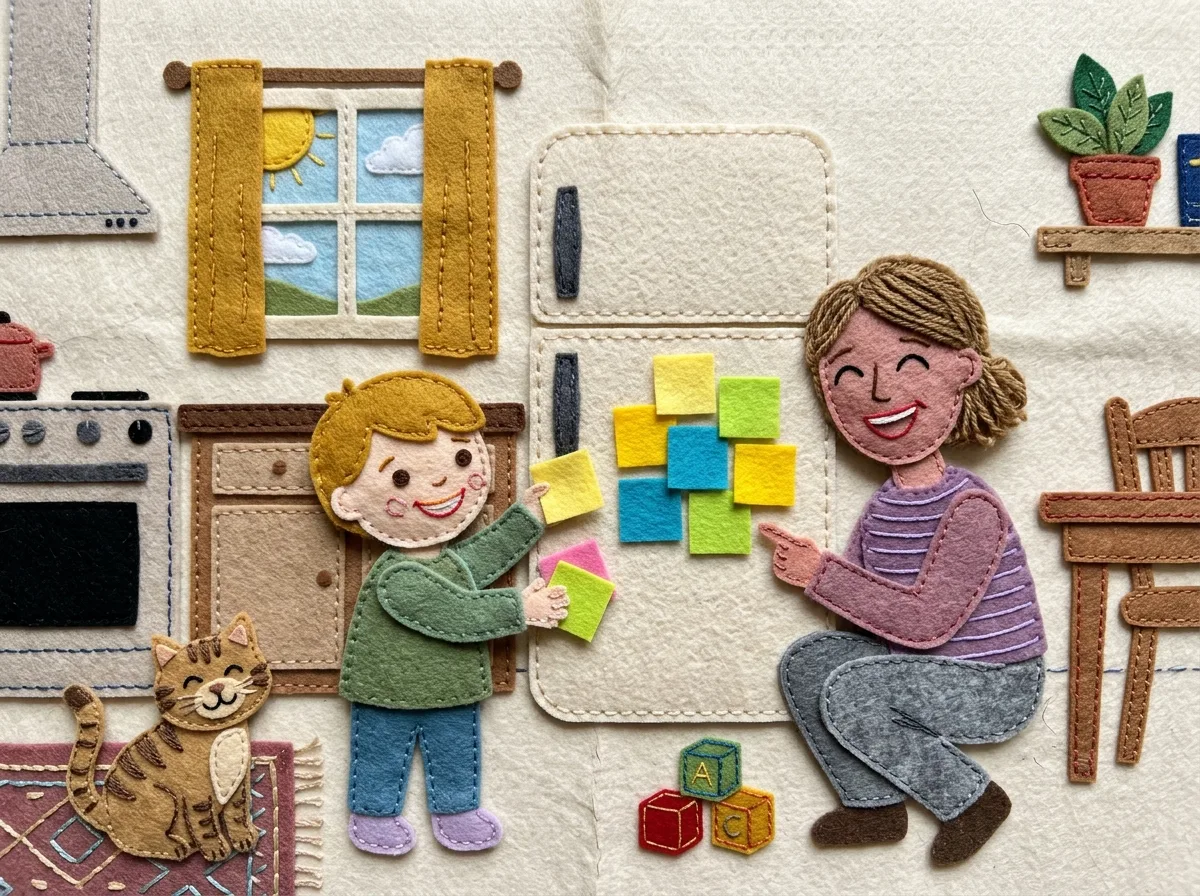
Ask the child to choose, not copy. Picture descriptions, true-or-false statements, sentence repairs, and quick interviews test both meaning and grammar.
Verb to be exercises for kids need an answer check and spoken retry. After an error, ask your child to identify the subject, select its form, and repeat the sentence.
Fill in the Gaps
Complete each sentence with am, is, or are.
1. I ___ nine years old.
2. The apples ___ on the table.
3. Our teacher ___ kind.
4. We ___ in class.
Answers: 1. am; 2. are; 3. is; 4. are.
Make the Sentences Negative
Change each sentence without changing its tense.
1. The soup is hot.
2. We are late.
3. I am worried.
Answers: The soup is not hot. We are not late. I am not worried. Contractions such as isn’t and aren’t are correct.
Turn Statements into Questions
Move the correct form of “to be” before the subject.
1. Your bag is heavy.
2. They are at home.
3. You are hungry.
Answers: Is your bag heavy? Are they at home? Are you hungry?
Common Mistakes and Useful Corrections
Children may omit the verb: She happy. Repeat the sentence with a pause—“She… is happy”—then request the complete form. This repairs the pattern without interrupting conversation with a long explanation.
Children may match the verb to the nearest noun rather than the subject: The box of pencils are open. The singular subject requires The box of pencils is open. Colour-coding the subject and verb highlights the link.
Do not teach every exception at once. Secure present-tense statements, add negatives and questions, then introduce was and were. Verb to be exercises for kids should progress through sentence changes and richer meanings, not longer worksheets.
- Practice five Verb to be exercises for kids aged six to eight.
- Use picture cards to correct am, is, and are choices together.
- Read one short story, then underline every form of the verb together.
- Ask ten simple questions and model complete answers before your child responds.
- Repeat incorrect sentences correctly twice, keeping feedback calm and encouraging.
For the rule wording, Wikipedia — English Grammar is a useful reference while the practice examples here stay adapted for children.
Frequently Asked Questions
When Should a Child Learn the Verb “To Be”?
A child can use basic forms after learning short English sentences. Young learners may begin with fixed patterns such as I am happy and It is red. Older beginners can study subject-form rules directly. Progress depends on English ability, not one age.
How Many Forms Should We Teach at One Time?
Begin with am, is, and are in affirmative sentences. Once your child selects them confidently, add not, then questions. Introduce past forms later. Verb to be exercises for kids work best when one sentence pattern changes at a time.
Should Children Learn Contractions or Full Forms First?
Teach full forms first because they reveal the grammar: she is and they are. Add contractions soon afterward for natural speech. Children should recognise that she’s and she is mean the same, while full forms can add emphasis.
What If My Child Keeps Saying “I Is”?
Use one stable model: I am. Ask your child to complete sentences such as I am hungry, I am at home, and I am ten. Do not repeat the incorrect form. Give the correct phrase, have the child say it, then revisit it briefly.
Are Worksheets Enough for Learning “To Be”?
Worksheets test recognition and spelling, but children need to hear and say each form. Pair written tasks with brief exchanges about people, objects, feelings, or places. Speaking shows whether your child can communicate with the grammar.
Use three steps to reinforce the pattern:
- Start with one subject group and model two correct sentences.
- Practise statements, negatives, and questions aloud for five minutes.
- Try the same forms again during a familiar daily routine.
If your child needs steady speaking practice, start small — choose a trial lesson.
Stay updated on our latest tips and resources by following us on Instagram LearnLink.