What to Pay Attention to When Kids Learn English

What to Pay Attention to When Kids Learn English: A Practical Guide for Families starts with five checks: purpose, level, speaking confidence, habits, and age fit. A child may know words yet freeze in conversation; another may speak freely but miss reading patterns. Both need support, but different support. For ages 4-15, English grows when families ask: “Can my child understand, answer, try again, and use English outside lessons?” This guide helps parents track progress, support practice, and avoid pressure.
📥 English Learning Focus Cards for Kids
A printable word-and-phrase set to help families notice real progress beyond level labels.
Leave your email — we'll send the PDF to your inbox.No spam — the PDF plus one short reminder. Unsubscribe anytime.
What Families Need to Know First
Children do not learn English in a straight line. Listening often grows before speaking. Speaking often grows before accurate grammar. Reading and writing may come later, especially for younger learners still building home-language literacy.
That is why What to Pay Attention to When Kids Learn English: A Practical Guide for Families is not only about marks, levels, or exam names. Check skills together: Can your child follow an instruction? Can they answer without repeating the whole question? Can they ask for help in English?
For families, the first goal is often comfort with English as a living language. A child who greets a tutor, talks about a toy, explains a picture, and repairs a mistake is building the base for school work and exams.
Level Is More than a Label
Level names help planning, but can mislead. A child may be “A1” in reading and need more speaking time. Another may know classroom phrases but not understand a short story. When you hear a level, ask which skill was checked.
For school-age children, CEFR labels such as A1, A2, and B1 describe broad ability bands. They do not say what every 7-year-old or 12-year-old should do. They help most when tied to tasks: introducing yourself, describing a picture, reading a short message, or writing four clear sentences.
How to Use This at Home
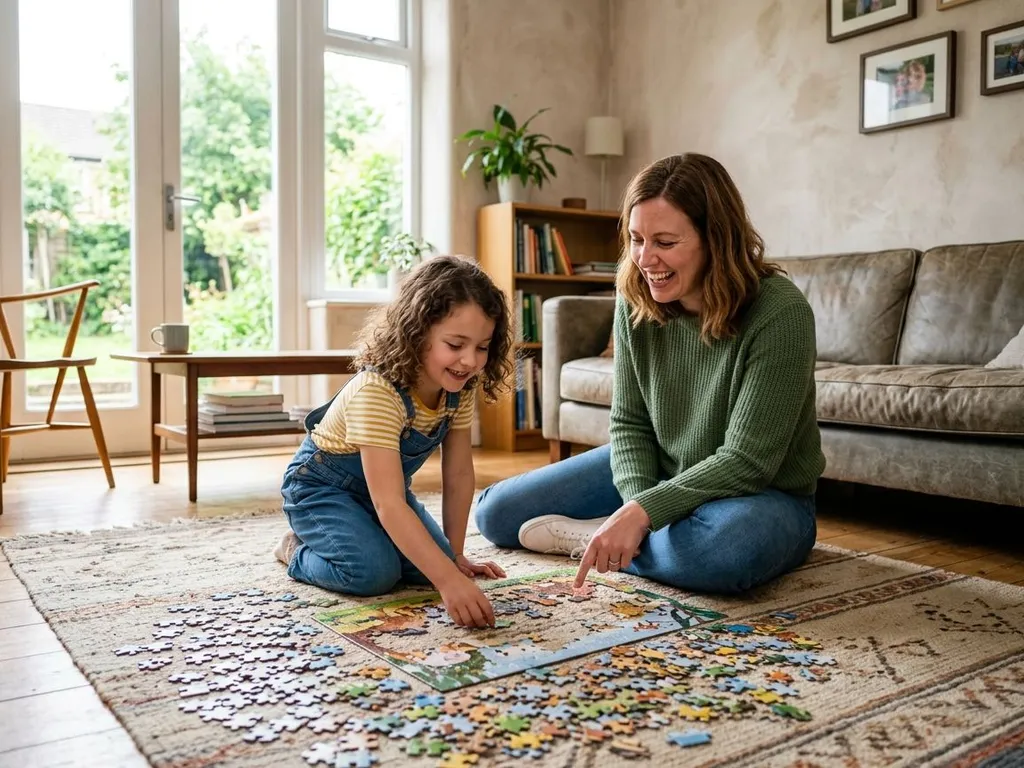
Home support should be short, calm, and predictable. Ten focused minutes can help more than a long session that ends in tears. Choose one aim: three animal words, one phrase, or one question-and-answer pattern.
Across LearnLink lessons, our tutors watch how a child responds, not only what the child remembers. Use the same lens at home. Notice whether your child needs a picture, a first sound, two answer choices, or a full model.
What to Pay Attention to When Kids Learn English: A Practical Guide for Families works as a weekly habit. Once a week, record one thing your child can now do in English: “She asked for water,” “He read five short sentences,” or “They answered without switching language.”
Examples by Age
Children need movement, pictures, rhythm, and play. They may learn “big,” “small,” “jump,” and “stop” before they explain grammar. Progress means the child joins in and understands what to do.
Children can handle short routines: warm-up, new words, practice, and a small speaking task. They still need models. Instead of “Tell me about your weekend,” try: “I went to the park. I played football. Your turn.”
Children often want English that feels practical and age-respectful. They may need school grammar, plus topics that invite thought: hobbies, travel, games, science, friendship, music, or plans. Progress includes stronger reasons, longer answers, and self-correction.
Practical Activities That Show Real Progress
Choose activities that reveal how your child thinks in English. Flashcards help only when they move beyond naming. After “apple,” ask “Do you like apples?” After “train,” ask “Where can a train go?” Small questions turn words into language.
For younger children, use a three-step picture routine: point, say, act. Point to a cat, say “The cat is sleeping,” then ask your child to act it out. For older children, use a two-minute talk: choose a topic, give three key words, and let the child speak without stopping for each error.
Quick Home Check
Ask your child three questions: “What is it?”, “What color is it?”, and “What can it do?” Use one object, toy, or picture. If your child answers all three with support, the next step is a fuller sentence: “It is a red bus. It can go fast.”
What to Pay Attention to When Kids Learn English: A Practical Guide for Families includes mood. If a child avoids English every time, the task may be too hard, too long, or too public. Lower pressure before raising the challenge.
When Exams or Certificates Enter the Picture
Some families use Cambridge-style young learner exams, KET-style preparation, or school placement tests to understand progress. These can help when the child is ready, but exam prep should not replace broad English growth.
Before any exam, check three things: current skill level, test format, and available time. A child who speaks but cannot read task instructions may need reading first. A child who knows grammar but gives one-word answers may need speaking first.
A steady timeline is kinder than a rush. For a low-stress exam goal, children often need months of practice, mock tasks, and feedback. No tutor or platform should promise a result. The honest aim is readiness: knowing task types, managing time, and using English under mild pressure.
Signs That Learning Is on the Right Track
Look for small, stable signs. Your child uses classroom phrases without prompting. They ask what a word means. They notice English in a song, game, sign, or book. They recover after a mistake. These signs show ownership.
What to Pay Attention to When Kids Learn English: A Practical Guide for Families should include balance. Accuracy matters, but constant correction can make a child speak less. Fluency matters, but unclear speech needs gentle shaping. Strong progress has both: free use first, focused correction next.
Sentence Repair Practice
Give your child one sentence to improve: “Yesterday I go to school.” Ask, “Can we make it about yesterday?” Help them reach: “Yesterday I went to school.” Then ask one real follow-up question: “What did you do there?”
- Notice one confident English response your child gives during daily conversation.
- Read one graded reader for ages 6-8 and ask three questions.
- Practice five familiar words with pictures, gestures, and one simple sentence.
- Use a two-minute bedtime recap to hear what your child remembers.
- Celebrate effort when your child self-corrects without waiting for help.
When a word has several meanings or pronunciations, Cambridge Dictionary is a useful check before turning it into child-friendly examples.
Frequently Asked Questions
How Do I Know If My Child Is at the Right English Level?
Look at what your child can do without heavy help. Can they understand short instructions, answer simple questions, read a short text, or write a few clear sentences? A level label helps only when tied to skills. If speaking, reading, and writing are uneven, that is normal. Plan from the weakest needed skill, not from the strongest one.
How Often Should My Child Practise English at Home?
Short practice works for most families. For a 5- to 9-year-old, 5-10 calm minutes on non-lesson days may be enough. Older children can often manage 15-20 minutes. The key is one task: one short story, five words, or three spoken answers. Long, tired practice often creates resistance.
Should We Correct Every Mistake?
No. Correct the mistake that blocks meaning or matches the lesson goal. If your child is telling a story, let the story finish first. Then choose one repair: past tense, word order, or pronunciation. Children need to feel that English is a tool for saying something, not a sentence-by-sentence test.
Can Online Lessons Work for a First-time Learner?
Yes, if the lesson is age-appropriate and interactive. A first-time learner needs a warm routine, visuals, simple turns, and chances to speak. For younger children, parents may need to stay nearby at first. Over time, the child should answer more independently. Independence shows online learning is becoming familiar.
What Should We Pay Attention to When Kids Learn English for an Exam?
What to Pay Attention to When Kids Learn English: A Practical Guide for Families applies to exams too: check the level, task type, confidence, and timeline. Do not begin with full tests if your child cannot yet handle the parts. Start with short listening, reading, and speaking tasks, then build toward timed practice when the format feels familiar.
If your child needs steady speaking practice, start small — choose a trial lesson.
Stay updated on our latest tips and resources by following us on Instagram LearnLink.